
Introduction
In the United States and other Western or colonial nations, water is viewed as a commodity. The same can be said for many natural features, but water is often the most egregious example. Protections are solely centered around how effectively the water in question is able to serve a predesignated purpose, be it fishing, agriculture, drinking water, or recreation. If the river is unable to serve its purpose, it is deemed unhealthy. The health of water in Western nations is tied almost entirely to its value- if fish from it are safe to eat, if it is clear enough to swim in, and other similar criteria. While these are valuable factors to consider, they should not be the entirety of what water health hinges upon. Instead, the health of water should be evaluated through criteria based on TEK, or Traditional Ecological Knowledge.
TEK, which is a concept popularized by Indigenous environmentalists, advocates for consideration of Indigenous values in conservation. When using TEK to evaluate water health, a healthy river is one that is able to flow as intended, with natural change and cycles, and function as both a geographical and temporal connection. Historically, these ideas have been dismissed within the world of ecology as overly sentimental and based in spirituality rather than science. However, movements to decolonize environmentalism push for a blend of TEK and current scientific approaches. Many Indigenous groups, such as the Māori people of New Zealand and the Yurok Tribe of Oregon in the United States, are at the forefront of this movement and have spearheaded restructuring of environmental law. A major concept within TEK is that of legal personhood for natural features, which was pioneered in the 1970s but has only become widely popular in the last decade.
These concepts align with archaeological research to understand water perceptions of Florida’s pre-Columbian Indigenous peoples. Artifacts found along the Wekiva River, specifically in the archaeological site Shell Island, support this idea. Shell Island, a shell midden located in the lower Wekiva, was a continuously re-inhabited site for pre-Columbian Central Florida peoples. A buildup of artifacts through time, many likely placed ceremonially rather than discarded, and symbolic artifacts made from distant and oceanic materials indicate that the Wekiva River may have been viewed as both a literal and symbolic place of connection and renewal. Today, the Wekiva River struggles with the same commodification that impacts rivers across the United States. Overuse of its water and chemical pollution hinders it, reducing flow and preventing it from continuing to exist as it has for thousands of years. To help the Wekiva River, legal reframing is necessary. Falling in line with the suggestions of TEK, the Wekiva River would greatly benefit from the status of legal personhood.
This paper begins with a broad look at Indigenous water perspectives in the United States, highlighting Haida and Potawatomi beliefs. It then moves to examining Florida’s pre-Columbian Indigenous cultures and context for the pre-Columbian history of Florida. Following this is an in-depth examination of Shell Island’s importance and the artifacts found there, which leads to discussion of the Wekiva River’s conservation status. Finally, the legal perspective is considered, including context and precedent for the movement of legal personhood globally and in the United States. When taking Traditional Ecological Knowledge and the position of the Wekiva River into account, this paper suggests that new legislation introducing the status of legal personhood to the Wekiva River would be highly beneficial.
The Indigenous Perspective
Contemporary Indigenous Voices
Indigenous cultures often hold a unique perspective on water and its purpose, guiding approaches in conservation and management. Western and colonial governments tend to hinge legal protections for natural features, particularly bodies of water, upon their designated use- for example, agriculture, recreation, or fishing. This creates a relationship between health and servitude and encourages consumerism over conservation. However, across North American and global Indigenous cultures, these attitudes are not shared. Several specific tribes have risen to the forefront in leading the push for TEK. One of these tribes is the Haida people of the North American Pacific Northwest. Author Wendy F. K’ah Skáahluwáa Todd states that “[t]he Haida have a complex connection and spiritual relationship with water, and it is cared for with great respect…there is a belief that we are tied to our mothers, land, and waters by an invisible thread like an umbilical cord keeping us connected to our environment” (Todd et al. 2023). To many Western and colonial conservationists and environmental scientists, attitudes such as these would be dismissed as non-scientific, overly emotional, and animist, all traits that are vehemently avoided to be considered scientifically valid. However, a more holistic and personifying approach to the management of water may be necessary.
Through these alternative relationships with water, Indigenous groups like the Haida define health and approach water use very differently than most Western and colonialist cultures. According to Todd, “[i]n the Haida culture, water is associated with luck, and it is believed that consuming too much water could wash away one’s luck. Consideration of the idea of luck leads to the realization that luck is not merely an abstract idea…Luck is inferred to mean one’s health, encouraging one to stay hydrated and cleansed, but not to the point of detracting from underlying health issues” (Todd et al. 2023). It can be extrapolated that health is tied to moderation and not consumption, as well as not interfering with standard and important bodily processes. Todd specifically refers to human health when discussing the Haida concept of luck, but the principle can be applied to other concepts. Luck, as defined by the Haida, is a person’s good fortune and good bodily health, and to consume water excessively or irresponsibly removes that luck. Rather than treating nature as something to be subjugated, many indigenous cultures treat nature as something to be participated in. Potawatomi botanist and author Robin Wall Kimmerer says the following in her book The Serviceberry: Abundance and Reciprocity in the Natural World: “To name the world as gift is to feel your membership in the web of reciprocity. It makes you happy—and it makes you accountable. Conceiving of something as a gift changes your relationship to it in a profound way, even though the physical makeup of the ‘thing’ has not changed” (Kimmerer and Burgoyne 2024). As argued by Kimmerer, a simple shift of language drastically shifts the way the world is interacted with. Framing the water as both a gift and a connecting factor creates gratitude and an obligation for reciprocity, rather than allowing people to feel as though they have the right to commodify it. Traditional Haida folklore also supports the idea of water possessing its own form of sickness and health.
Raven steals water and ‘spits it out on the land’ and ‘the water soon flowed away’ describes precipitation and the flowing of rivers. The story describes rivers becoming dry during cycles of drought and how Raven’s mind was sick because of this. This part of the story is a reference to regional climate impacts at a time when precipitation was low, hence rivers were low. The sickness signifies stress communities experience from decreased food security in periods of drought (Todd et al. 2023).
Raven’s sickness is tied to the river’s sickness, which is defined as an inability to flow as intended. The drought negatively affects the people living on the river, as the crucial connectivity and resources it provides have been lost. However, the river is also inherently sick. It is not only healthy through its ability to be used by the people who rely upon it; it is also inherently healthy when it is able to flow as intended.
Indigenous philosophy towards water usage and TEK suggest that the way forward is one where water is treated as a participating member of a collaborative relationship rather than a thing to be exploited. Kimmerer shares that “if I mistreated that spring, by peeing in it or by damming up water that belongs to itself and selling it off, the consequences would be an emotional breach as well as the ruination of the water quality. I’d feel as dirty as the water…But that moral sense does not constrain an economy that views water as a commodity, property to be bought and sold” (Kimmerer and Burgoyne 2024). To make the shift and learn from Indigenous cultures on water treatment is to begin to heal Western and colonialist societies’ relationship with the water that currently serves them. It will improve both the existence of the bodies of water in question and the people who rely on them. “As the water is, so are the people, and so is their health” (“Peerless Sanford” 1908).
Florida’s Indigenous Cultures
Pre-Columbian History
Tragically, there are no contemporary voices from Florida’s original Indigenous populations to share the Pre-Columbian perspective on water health. 12,000 years ago, Florida was inhabited by, most prominently, the Timucua and the Calusa. The two groups controlled, respectively, much of North and South Florida. Other smaller tribes filled the spaces between them. These peoples relied heavily on the water surrounding them for food and transportation. They ate mollusks and snails, fished and hunted, and traveled via canoe. Despite the success of Florida’s Paleoindian cultures, they are only known today through archaeological data left behind and accounts from Spanish colonizers. “The natives of Tampa Bay were decimated by European diseases such as measles, smallpox, and influenza, as well as, by warfare and slaving raids. By 1711, there were no organized Native towns in Florida except near St. Augustine, where the Castillo de San Marcos offered some protection from northern incursions” (Kite-Powell 2023). After nearly a century with minimal Native American presence, groups of Creek Native Americans were pushed into North Florida by conflict. These groups would later develop into the Seminole and Miccosukee nations of modern Florida. Despite the unfortunate lack of contemporary voices from pre-Columbian Indigenous groups, as previously mentioned, these tribes left behind a rich wealth of archaeological data that can be used to extrapolate their perceptions of water. The most valuable of these for the purpose of this project are shell middens.
The shell middens of eastern Florida were largely created by the St. Johns I and St. Johns II cultures. These peoples lived along the St. Johns River and relied heavily upon these waters, using them for travel, drinking water, fishing, and more. Many of their communities were directly adjacent to the river (Milanich 1994). Large shell mounds were tantamount to the St. Johns I and II cultures. In these mounds, archaeologists have uncovered evidence of their way of life. The most popular choices of protein included snail, catfish, turtle, and tortoise, and the weights used to cast the nets to catch these animals have also been discovered. Wood chips, likely the cast-offs of the canoe-making process, have been found, as well as pottery and carved stone, some of which originate from hundreds of miles away (Milanich 1994).
Shell mounds themselves are highly debated by archaeologists and are still being studied today. Shell mounds were originally believed to be trash heaps; the concreted shells were explained away as the debris created by a shellfish-rich diet. “Because many of the Archaic mounds of northeast Florida consist of the shell of snails and bivalves, resources known to be consumed, some archaeologists dissuade speculation that these deposits were anything other than the refuse of everyday living” (Sassaman 2013). However, deeper investigation in recent years has brought this into question. These shell mounds often contain valuable items that are unlikely to have been discarded as trash, including net weights, intricate pottery, potential jewelry, and even burials. “Coupled with the loose, unconsolidated nature of the shell matrix and lack of clearly defined surfaces or pedogenic structures, the limited evidence for “routine” domestic practices supports the inference that these mounds were purposefully constructed through repeated events spanning only a few generations” (Sassaman 2013). The physical evidence found within the St. Johns cultures’ shell mounds provides a glimpse into their lifestyle, but it does so in a vastly different way from what a pile of refuse would provide. It demonstrates the value and perception of bodies of water, as well as providing insight into how Florida’s Pre-Columbian Indigenous cultures interacted with the water around them.
Beyond a glimpse into day-to-day life and beliefs, Florida’s shell mounds are believed by some archaeologists to have deeper symbolic meaning. Water, across many North American Indigenous cultures, holds a connotation of rebirth. It is theorized that this reasoning is behind the popularity of water burials. Water both symbolizes renewal through the water cycle and can literally preserve the bodies interred within. An example of this can be found in Little Salt Spring, which “became a focus of activity for Middle Archaic Period people… Their dead were interred in the moist soft peat of the slough and as the water level continued to drop the burial sites followed, progressing into the exposed pond basin…Some of the burials are in a remarkable state of preservation” (Purdy 1991). Similar burials occurred repeatedly across the state, bodies being interred in ponds and bogs such as Windover, likely due to their ability for preservation and therefore symbolic representation of immortality. Later in Florida’s pre-Columbian history, “[s]hell became the symbolic equivalent of water, and burying people in shell or capping earthen mortuaries with shell offered immortality or renewed life in the same manner as pond burials. Piling shell on the earth may have further symbolized the emergence of land from water, life from water, and even humans from nonhumans, as cosmogony dictated” (Sassaman 2013). This interpretation of shell mounds further reinforces the importance of water as an entity with its own sense of health and a connecting factor. As water connects physical locations and provided the crucial ability for long distance travel, it also, in the theorized philosophy of Florida’s pre-Columbian peoples, connected life with death. This hinders a river’s health in its ability to flow as intended and to connect and preserve rather than on its ability to serve the human population. As rivers connect both physical places and the cycle of life, shell mounds may have been intended to connect water to land.
Shell Island and The Wekiva River
Shell Island’s History
Shell Island is a shell midden located in the Wekiva River near Wekiva Island. Created between 5,000 and 7,000 years ago, it is the largest Archaic habitation site in the Wekiva River basin (Gill 2014). It has continuously been returned to and reinhabited by different peoples throughout both Pre-Columbian and post-colonial history. Measuring 61 meters in width by 305 meters in length, it reaches a height of four meters at its tallest (Gill 2014). Shell Island is largely composed of local snails and freshwater mussels, leading archaeologists to originally believe that it was a refuse heap, like many other shell middens had been labeled before it. In a thesis on the conservation of Shell Island, Rollins College student Morgan Gill stated that “[t]he midden ‘is essentially a garbage dump increasing in size by the discarding of food remains, broken tools, and pottery fragments’” (Gill 2014). However, archaeological surveys beginning in the 1970s in addition to the recent reevaluations of the purpose of shell mounds may indicate that Shell Island has a deeper meaning.
Each period of Shell Island’s inhabitation reflected drastic changes in material culture. It is unclear if these changes reflect movement of different groups or in-situ cultural change. The fact that people continued to return to and inhabit the river basin, and more specifically Shell Island, can be interpreted as a desire to build connections both through time (by literally living atop the remains of your ancestors) and through space (by living alongside a river and bringing items from far-off places to Shell Island). The earliest artifacts from Shell Island date back to the Early Mount Taylor phase. The Newman Point, detailed below in figure 1, is one such artifact.

Figure 1. A Newman Point from the Rollins College Archaeology Department collection. Photograph by Stella Stollings.
This point is estimated to be between 7400 and 4600 years old. The piece still retains sharp edges and a point, even after thousands of years, and shows no signs of damage, making it unlikely to have been discarded as trash. This lends credence to the idea that Shell Island has always been more than a heap of refuse. With the development of pottery in North America, pottery also made its way to Shell Island. Pieces from the Orange Period have been discovered there, including the rim sherd detailed in figure 2. This piece displays a decorative style called incising.

Figure 2. An Orange Period incised pottery sherd from the Rollins College Archaeology Department collection. Photograph by Stella Stollings.
This piece of pottery is both intricately decorated and displays soot marks, likely from daily use in cooking. It is estimated to be 4600-3500 years old, showing later re-inhabitance. Also interred in Shell Island during the Orange Period are sherds of a large soapstone vessel (see figs. 3, 4, 5). The soapstone was sourced from the Piedmont Region of Georgia and South Carolina, implying that the area held importance and connected people across great distance.

Figure 3. A sherd of a large Orange Period soapstone vessel from the Rollins College Archaeology Department collection. Photograph by Stella Stollings.

Figure 4. A sherd of a large Orange Period soapstone vessel from the Rollins College Archaeology Department collection. Photograph by Stella Stollings.

Figure 5. A sherd of a large Orange Period soapstone vessel from the Rollins College Archaeology Department collection. Photograph by Stella Stollings.
The size of these sherds also indicates that the original vessel would have been massive and very heavy, making transporting it to Shell Island extremely difficult. The fact that the effort was undertaken says that Shell Island and the surrounding Wekiva River were important. It also strengthens the argument that Shell Island and the Wekiva River represent connections. This trend continued into more recent periods of Florida’s history. Pottery from the St. Johns I and II periods, stretching from 3500 to 500 years ago, are also present at shell island. The large rim sherd detailed in figure 6 is estimated to be from between 1250 and 500 years ago.

Figure 6. The rim sherd of a large check stamped vessel from the Rollins College Archaeology Department collection. Photograph by Stella Stollings.
It is caked in soot, indicating that the vessel was used over fire, likely for cooking. However, the vessel also displays evidence for a desire to remain connected through time; on each side, bore holes are visible. These holes were used to repair cracked vessels and would have had matching holes on the other side of a crack, through which fiber was fed to lash the cracks back together. These repairs would leave the vessel nonfunctional for its original purpose, as it would no longer be able to hold liquid. Regardless, the pot was repaired and likely continued to be used. Also from the St. Johns II period is a remarkable find. A 1982 excavation discovered a large, extremely delicate ceramic pot interred completely intact (see fig. 7). Soot from inside the bowl was radiocarbon dated between 1033 and 1158 CE.

Figure 7. A large ceramic bowl unearthed at Shell Island from the Rollins College Archaeology Department collection. Photograph by Marilyn Stewart.
This vessel would have been placed carefully and intentionally in order to be retrieved intact as it was. Measuring over a foot across with thin and delicate walls, it was almost certainly not lost or thrown away. The burying of this bowl likely had deeper meaning, cementing the importance of Shell Island and the Wekiva River to Florida’s pre-Columbian people.
Midden burials were also common throughout Shell Island’s occupation period. At least three individuals are buried in Shell Island, estimated to be from the St. Johns period. The practice of midden burials is thought to represent immortality, renewal, and connection between humans and the natural world. The inversion created by heaping shell symbolizes returning ancestors to the water, forging connection. Beyond connection through time, Shell Island also demonstrates geographical connection between the Wekiva River and the ocean. Initial perceptions of shell mounds were that they were composed solely of local shells that were the byproducts of a mollusk-rich diet. However, on Shell Island, there are many examples of marine shells transported from the coast. There are frequent instances of adzes, or small axe heads, made of Queen Conch shell (see figs. 8, 9, 10), which would have traveled from south Florida. In addition, shark teeth have also been found (fig. 11).

Figure 8. A queen conch (Strombus gigas) shell adze from the Rollins College Archaeology Department collection. Photograph by Stella Stollings.

Figure 9. A queen conch (Strombus gigas) shell adze from the Rollins College Archaeology Department collection. Photograph by Stella Stollings.

Figure 10. A queen conch (Strombus gigas) shell adze from the Rollins College Archaeology Department collection. Photograph by Stella Stollings.

Figure 11. A shark tooth found on Shell Island from the Rollins College Archaeology Department collection. Photograph by Stella Stollings.
The finds that are most significant to this research are that of many pieces of Tick Island incised pottery (see figs. 12, 13), from Florida’s Orange period, and the shells of lightning whelks (see figs. 14, 15).

Figure 12. A Tick Island incised pottery sherd from the Rollins College Archaeology Department collection. Photograph by Stella Stollings.

Figure 13. A Tick Island incised pottery sherd from the Rollins College Archaeology Department collection. Photograph by Stella Stollings.

Figure 14. A lightning whelk (Busycon sinistrum) from the Rollins College Archaeology Department collection. Photograph by Stella Stollings.
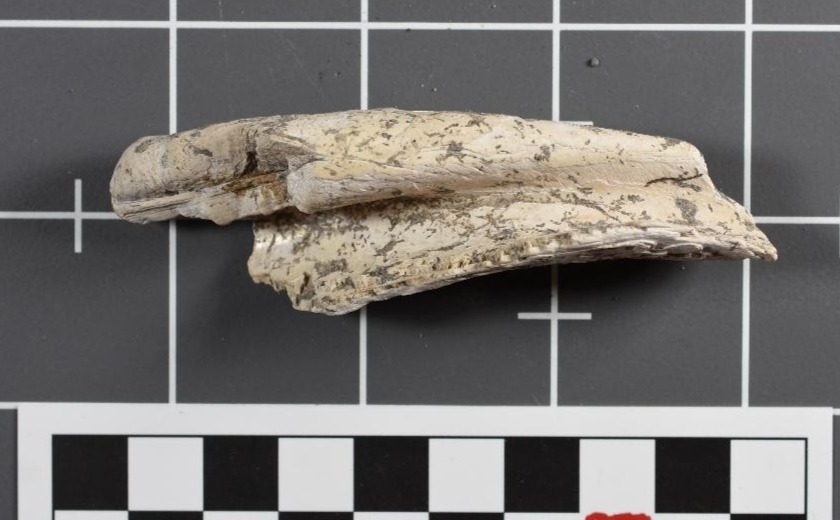
Figure 15. A lightning whelk (Busycon sinistrum) from the Rollins College Archaeology Department collection. Photograph by Stella Stollings.
The lightning whelk is of particular interest here because of its significance to Florida’s pre-Columbian Indigenous cultures. It is one of the few species of mollusk to have a left opening shell. The left opening spiral connects to other beliefs in Florida’s Indigenous history and is mimicked in Tick Island incised pottery. Tick Island incised pottery, which is ornamented with left opening spirals, is sometimes believed to be a skeuomorph of the lightning whelk, which was, as previously mentioned, held in great regard. The left opening spiral, in Southeastern North American Indigenous cultures, is often associated with renewal and the flow of time. Vessels created from lightning whelk shells or decorated with the left opening spiral were used for ceremonial purposes such as making and consuming medicines (Gilmore 2024). In this way, the lightning whelk and the skeuomorphic Tick Island incised pottery are analogous to Shell Island. They represent a cycle of return and renewal, the passage of time, and connection both through time and geographical space. The Wekiva, and rivers as a whole, act as a renewing force, a perpetual cycle, and a connector in their ability to flow as naturally intended.
The Wekiva River
Between Rock Springs, Wekiva Springs, King’s Landing, and Wekiva Island, Wekiva Springs is a highly popular location for swimming, fishing, and boating. It is one of inland Florida’s best-known attractions. It is also designated Outstanding Florida Water, which grants extra protections due to its “excellent water quality or exceptional ecological, social, educational, or recreational value” (Wekiva River 2025). Despite this, the river is dying. The Seminole County Water Atlas designates it as an impaired body of water, which means it is polluted to the point of being unable to complete its designated purpose.
The Wekiva River “is choked by high levels of nitrogen and phosphorus pollution and the accompanying nuisance algae and aquatic weeds. About 1 million pounds of nitrogen…leaches into Wekiva basin groundwater each year, and pollution also troubles the nearby Econlockhatchee River” (Renner 2021). This pollution stems largely from agriculture and lawn care. Chemical fertilizers are high in nitrogen and phosphorous, and Florida’s wetland and river biomes are adapted for low nutrient levels. The lack of nutrients drives off invasive plants that thrive in richer environments. However, as fertilizer runoff floods into these bodies of water, it gives highly opportunistic organisms like duckweed and blue-green algae the chance to invade. The native plants that are vital to these habitats are then outcompeted. This also leads to eutrophication, which is the process of a body of water becoming depleted of oxygen. Rapid growth of plants like duckweed leads to said plants overconsuming the oxygen in a body of water, which leads to the death of the ecosystem. Other plants and aquatic creatures are unable to find sources of oxygen and die off.
This issue is driven by the way bodies of water are perceived. Much of the regulation surrounding water hinges on its ability to serve a predesignated purpose such as fishing or recreation. The Wekiva is also being drained for rapidly expanding suburban water supply needs. “So much water is now being pumped from the aquifer that the amount that flows from Rock and nearby Wekiwa springs has gone down” (Allen, 2025). The modern public perception of water has designated the Wekiva River’s purpose as servitude, and its health needs only relate to how successfully it can fulfill that purpose. “’The DEP and the water management districts have determined that significant harm, which is typically over 15% of habitat loss, is already occurring,’ [Ryan] Smart says. ‘We need to stop the destruction before things get so bad that it’s ruined’” (Allen, 2025). A river’s ability to self-renew through the water cycle and to connect both time and place, as the Wekiva does with Shell Island, is tantamount to its health as viewed through the lens of Florida’s pre-Columbian Indigenous cultures and through the perspective of contemporary Indigenous cultures worldwide. However, the modern legal status of water sits upon its ability to serve. This results in impeded flow from overuse and diversion of drinking water, pollution from agriculture and construction, and habitats being overrun by invasive species. For the Wekiva and other rivers around the world to return to good health as interpreted in this paper, a reframe of the way rivers are legally perceived is crucial.
The Legal Perspective
The Current Status
“Water rights are typically defined as ‘use rights,’ which not only embeds the notion of individual rights to use water, but also that water only really exists in the eyes of (Western) law as an object to be used” (O’Donnell 2023). Because of this system, legal protections for water are based on how well they can serve a purpose. Rivers are protected from pollution that would make fish inedible or water undrinkable, but before the acceptable threshold is exceeded, pollution is allowed to occur. Water is rarely protected from overuse. Protections purely for the sake of the river’s continued existence, or protections from changing how the river exists, are exceedingly rare. “We, and the rivers, lakes, aquifers, and wetlands we depend on, are thus trapped in a relationship of exploitation and dominance, in which waterways suffer and suffer again, until they occasionally exert sufficient power to remind us of our dependence on them, through drought or flood” (O’Donnell 2023).
The soured relationship between humans and water can be ascribed to the disregard of Indigenous principals and Traditional Ecological Knowledge in favor of profit and comfort. “When people and their reciprocal relationships with place cease to exist, ontological politics and colonization fill the void in a process that some authors have described as environmental colonialism” (Clark et al. 2019). Environmental colonialism exists hand in hand with political and social colonialism, and the way forward is to move past it. Embracing TEK is crucial. However, the process of unlearning environmental colonialism and undoing the laws that keep it in place is complex. “Contemporary Western (and frequently colonial) water laws are the product of over a century of conquest and domination of water resources” (O’Donnell 2023). In order to begin that complicated process, legal reframing of water that fits within current legal precedent, rather than a drastically new system, is the next step. For this, policy can look toward a conservationist movement that began in the 1970s and has been steadily pushing to the forefront of environmental law. Proponents of this movement ask this: “Since the US Supreme Court had recognized legal personhood for corporations, shouldn’t rivers be people too?” (Renner 2021).
Defining Legal Personhood
To understand the legal precedent and argument behind the movement, it is first necessary to define the gap between humanity and legal personhood. A legal person is a concept that exists within legal systems globally, and it is notably distinct from social personhood. A legal person is an entity that is granted rights and responsibilities, as well as gaining the ability to sue or be sued in courts of law. “The world of the lawyer is peopled with inanimate right-holders: trusts, corporations, joint ventures, municipalities, Subchapter R partnerships,12 and nation-states, to mention just a few.” (Stone 1972). The commonality of granting legal personhood to corporations is one of the strongest arguments for why rivers deserve the same. Corporations are granted personhood to allow them to exist legally separately from their human figureheads. This grants the corporation itself the ability to hold property and enter into contracts. Legal movements can be made on behalf of the corporation, rather than the humans who created the corporation. This same ability for rivers and other natural features would be groundbreaking.
The most prominent argument against legal personhood for bodies of water is that bodies of water could not fit into the parameters for legal personhood. Corporations, for example, have the right to legal independence but the responsibility of being held legally responsible for actions and of paying taxes. A river cannot be sued for rising above its banks and destroying property, and it cannot pay taxes to the government. However, the definition of legal personhood used for this argument is flawed. Rights and responsibilities are not always comprehensive and are not granted equally to all human legal persons or corporations. “We say human beings have rights, but- at least as of the time of this writing- they can be executed. Corporations have rights, but they cannot plead the fifth amendment; In re Gault gave 15-year-olds certain rights in juvenile proceedings, but it did not give them the right to vote” (Stone 1972). Responsibilities are also not granted universally in exchange for rights. In the case of minors, the United States legal system grants them many of the same rights as adults- right to freedom of speech, to protection from harm, and more- but they do not hold the same responsibilities as an adult.
Legal personhood for bodies of water is not intended to be a universal or perfect solution, but it is a leap forward on the grounds of creating a framework for further environmental legal protections. “When the river becomes a legal person or legal subject, it is an entity constructed as a legally powerful individual, able to protect itself and enforce its own rights against those of others… creating a level playing field between nature and humans (or corporations) is necessary to ensure nature’s protection” (O’Donnell 2023). As the legal system currently stands, damages against bodies of water or natural features must be brought to court based on how it affects human stakeholders. “So far as the common law is concerned, there is in general no way to challenge the polluter’s actions save at the behest of a lower riparian-another human being-able to show an invasion of his rights…The lower riparians may simply not care about the pollution” (Stone 1972). When no stakeholders are aware of the plight of the river or simply do not care, there is no legal framework for legally reversing the damages done. Granting legal personhood to rivers would not fully solve the issue, nor would it instantly pave the way for extensive legislature. It would, however, create a precedent to use in further progress. “[I]n recognizing the river as alive, the river is re-made in law as a living being, with whom it is now possible to have a two-way relationship defined by reciprocity and mutual obligation, rather than merely a one-way relationship of domination and exploitation” (O’Donnell 2023). Creating the shift in language and perception builds a foundation for future progress. In a world where environmental decay is a daily occurrence and points of no return pass daily, progress on legal reform is pressingly important but happening much slower than it should be. However, in the last 10 years, the movement for rivers as legal persons has gained a foothold.
The Precedent
In 2017, several claims were made for extended rights of natural features and for legal personhood for bodies of water, mountains, and more. This “appeared to signal a tipping point in the global acceptance of a new and evolving legal status for nature.” The true tipping point came when the legal system of Uttarakhand in India passed legislation that awarded legal personhood to the Ganges and Yamuna Rivers, as well as their “glaciers, lakes, air, meadows, dales, jungles, forests, wetlands, grasslands, springs, and Waterfalls” (Clark et al. 2019). This success for the movement shifted legal proceedings into gear, allowing other countries to pass their own legislation, although not without many other attempts meeting roadblocks. However, the 2017 success in India was not the beginning of this movement. The grueling fight for legal personhood being granted to nature began in the 1970s. “Forty-five years ago, when Christopher Stone famously asked whether trees should have standing, his suggestion was met with near deafening silence” (Clark et al. 2019)
Christopher Stone, a professor at University of Southern California for over 50 years, began the legal personhood movement with his 1972 article “Should Trees Have Standing?” He argued that entities gain rights gradually- historically, both children and women have been perceived as property of men, but gained rights slowly, the same way corporations have. He also pioneered a concept that is used in legal personhood cases today. Stone argued that when a person no longer has the mental faculties to represent themselves, courts appoint guardians to represent them in court, and that nature should be owed the same (Traub 2021). “Corporations cannot speak either; nor can states, estates, infants, incompetents, municipalities, or universities. Lawyers speak for them, as they customarily do for the ordinary citizen with legal problems” (Stone 1972). In the same way that a human with limited mental faculties or a physical inability to attend court is represented, nature can be as well. Corporations follow this rule too- they are granted a figurehead to speak on behalf of their interests. Although many may argue that natural features do not have the same interests that a corporation might, this is untrue. “[N]atural objects can communicate their wants (needs) to us, and in ways that are not terribly ambiguous…The lawn tells me that it wants water by a certain dryness of the blades and soil- immediately obvious to the touch-the appearance of bald spots, yellowing, and a lack of springiness after being walked on; how does “the United States” communicate to the Attorney General?” (Stone 1972). In the same way that a lawn might communicate its needs, a river can do the same; a changed flow outside of natural cycles of variation, an overtaking of invasive species, and algae blooms are all ways that a river might communicate its needs.
The idea of legal personhood for rivers also encourages the embracing of TEK. In New Zealand in 2017, legal proceedings began to grant legal personhood to the Whanganui River, with the goal of establishing a collaborative office between the Māori people and the New Zealand government to act as its legal representative. The case highlighted that “the very idea of the river highlights an anthropocentric ambivalence, an inconsistency in how humans conceive of and implement the legal personhood of Nature, and legal personhood of non-human entities more generally. In parliamentary debates preceding the passage of the Whanganui bill, New Zealand legislators exhorted ‘do not talk about the river, but rather to it’” (Clark et al. 2019). The Māori perspective also emphasized the river’s ability to connect, rather than its ability to provide. Legal personhood for rivers provides the groundwork for a cultural reframing, bringing public perception closer to what is emphasized by TEK. “The Whanganui Claims Settlement Act is groundbreaking in its legislative declaration of a river as a legal person. The Act not only embodies in law what Māori have always known, but it does so in a way that seamlessly melds the everyday prosaic with the otherworldly sacred” (Clark et al. 2019). The success of the Whanganui River’s fight for legal personhood is a victory for both the legal and social movements of rights for rivers. The granting of legal personhood both vastly improves the river’s environmental protections and brings the Indigenous perspective on water to the forefront.
In the United States, the fight to grant legal personhood to natural features has been long and difficult. The many failed attempts at introducing similar legislation have illustrated “the practical and legal difficulties faced by groups striving to navigate the thresholds of river personhood. These difficulties reflect not only how well-entrenched doctrine can relegate arguments of legal personhood to the periphery, but they also speak to a river so subsumed to human needs that its very personality as a river becomes moot” (Clark et al. 2019). However, in 2019, the movement found success with the Yurok Tribe’s fight for the Klamath River. The Klamath, which had been suffering from reduced flow and a decrease in native salmon populations due to poor management and climate change, was granted legal personhood under tribal law. This allows internal prosecution of damage to the river, and representative Amy Cordalis has stated that she hopes the ruling will also make external prosecution easier (Garcia-Navarro 2019). Cordalis says the following on what this new legal status means to the Yurok people:
What it means is it gives the right to the river to exist, to flourish and to naturally evolve and a right to a stable climate free from human caused climate change impacts. What that means is that anytime the river is hurt, for example, there’s a toxic pollutant that is, gets into the water of the river, we could then bring a cause of action against that polluter to protect the river (Garcia-Navarro 2019).
The Yurok people’s internal ruling only currently effects tribal law, but it may provide a basis for bringing similar legislation to external United States courts. In other places across the United States, the fight for new laws on behalf of rivers and their personhood continues.
Synthesis
In the case of the Wekiva River, a legal and social shift is crucial to restore it to good health under the definition created by this paper. “Water laws remain focused on the idea of the ‘water user,’ which is typically a human being, although the environment is slowly becoming recognized as a water user in its own right as well (although this remains contingent on the environment having legal rights to water)” (O’Donnell 2023). As previously stated, these user-focused laws have resulted in the degradation of the Wekiva. Disregarding Traditional Ecological Knowledge and Indigenous perspectives on conservation is the root of this issue and must ultimately be changed to effectively move forward. “Recognizing rivers as legal and/or living entities can be a way to ‘un-settle’ (or de-colonialize) colonial laws governing water by creating opportunities for Indigenous peoples to alter settler state law so that it recognizes their existing laws and cultural practices” (O’Donnell 2023). In the case of the Wekiva and Florida as a whole, this shift is especially needed. Florida’s natural and historical water flows have been severely altered by colonization and industrialization, with the Everglades’ historical sheet flow having been diverted for agriculture and drained to allow for construction.
Pre-Columbian Indigenous communities lived with the water, rather than forcing it to bend to its will. Even post-colonization, the Seminole people continued this tradition. Canoe trails were a vital part of the Florida Indigenous lifestyle, connecting parts of the state via water. “[A]s the water levels rose and fell throughout the season they would need to constantly be maintained. Otherwise, the trails would overgrow or be lost. But, this also meant the trails themselves could change and shift to new needs or pressures” (Butler 2024). The nature of these canoe trails meant that they did not hinder the water’s ability to change and flow but rather worked with it to connect different locales when necessary. TEK reintroduces the concept of flexibility into conservation and allows for a more nuanced approach. The Seminole Tribe, who have championed water rights in Florida, have long fought against treating all the United States’s bodies of water as if they have the same needs. Individual bodies of water very clearly demonstrate different needs, and these needs can be most appropriately communicated and defended by utilizing the concept of legal personhood. Rather than fighting for the overarching concept of water rights, activists can focus their intent on the change needed by one particular body of water. Individual fights will still contribute to the global goal of healing human relationships with water, but they will do so without treating it as a monolith.
In the Wekiva River’s case, the current battle is implementing the concept of legal personhood, and to do so, the average voter must be brought on board. The greatest challenge here is education. Regarding natural features as having independent identities and rights is often disregarded as fringe, animistic, and emotional rather than a valid legal strategy, stemming from the misunderstanding of the concept and function of legal personhood. Chuck O’Neal, director of the group Speak Up Wekiva, has been working to combat this issue. “’I thought of the guy pouring the sidewalk outside,’ says O’Neal, who owns a contracting business that refurbishes older homes. ‘How do I explain it to him—not to make a pun—in concrete terms? If I said, “Would you vote for giving rights to the Wekiva River?” that guy pouring cement would probably think I was from Mars’” (Renner 2021). Their solution was to use the plainest language possible, breaking down the concept of legal personhood into terms that the average person can more easily digest. Rather than presenting it as a groundbreaking environmental movement, their explanation was simple- “the amendment would prohibit pollution of Orange County waters while also allowing any local citizen to sue polluters on behalf of the river” (Renner 2021). In Orange County, their efforts were a success. In a 2020 county election, they enshrined the river as having the right to clean water. Although it is far from state or federal recognition of legal personhood, it is an excellent step forward and proves that these strategies can, indeed, work in the United States. Now, the question is whether this legislation will be able to take the next step.
Conclusions
With climate change constantly driving environmental crises and leaving environmental law without the adequate framework to respond, a major shift is necessary. Historically, water protection has focused solely on the ability of the water to be used by humans, and health has been defined on the same criteria. This paper examines the idea of turning away from this definition of water health and instead evaluating it through criteria that are informed by Indigenous Traditional Ecological Knowledge. In the specific case of Central Florida’s Wekiva River, these new definitions can be informed by archaeological data left behind in Pre-Columbian shell middens.
This paper chooses to redefine water’s health through its ability to connect, both geographically and temporally. This conclusion is supported by nationwide and global Indigenous knowledge as well as archaeological evidence found on Shell Island, a large shell midden in the Wekiva River. Health through connectivity can be supported by legal personhood for bodies of water, which grants the ability to have rights and protections beyond what is afforded by the communities who live off of them. This legal movement, which began in the 1970s, has gained steam in recent years and may be part of the answer to today’s plethora of environmental crises. Activists continue to fight to implement the concept worldwide, and in the case of the Wekiva River, legal personhood would provide vital protection to ensure that the river can be returned to and maintained in good health.
Works Cited
Allen, G. (2025, January 17). Development is taking a toll on Florida’s Precious Springs. NPR. https://www.npr.org/2025/01/17/nx-s1-5214642/florida-development-endangered-springs.
Butler, D. (2024, April 5). Seminole Spaces: The secrets of the Water Highway – Florida Seminole Tourism. Florida Seminole Tourism. https://floridaseminoletourism.com/seminole-spaces-the-secrets-of-the-water-highway/
Clark, C., Emmanouil, N., Page, J., & Pelizzon, A. (2020). Can You Hear the Rivers Sing? Legal Personhood, Ontology, and the Nitty-Gritty of Governance. Ecological Law Quarterly, 45, 787–844. https://doi.org/10.15779/Z388S4JP7M
Garcia-Navarro, L. (2019, September 29). Tribe gives personhood to Klamath river. NPR. https://www.npr.org/2019/09/29/765480451/tribe-gives-personhood-to-klamath-river
Gill, C. M. (2014, April 29). Preserving shell island: A plan for Cultural Resource Management and site stewardship. Rollins Scholarship Online. https://scholarship.rollins.edu/honors/3/
Gilmore, Z. I. (2024). Tick island incised: An early ceramic skeuomorph in Late Archaic Florida. Southeastern Archaeology, 43(3), 125–144. https://doi.org/10.1080/0734578x.2024.2365022
Kimmerer, R. W., & Burgoyne, J. (2025). The Serviceberry: Abundance and reciprocity in the natural world. Thorndike Press, from Gale, a part of Cengage Group.
Kite-Powell, R. (2023, April 17). Florida’s early American Indians. Tampa Bay History Center. https://tampabayhistorycenter.org/blog/floridas-early-american-indians/
Milanich, J. T. (2018). Archaeology of Precolumbian Florida. Library Press at UF.
O’Donnell, E. (2023). Repairing our relationship with rivers: Water law and legal personhood. A Research Agenda for Water Law, 113–138. https://doi.org/10.4337/9781802204476.00011
Purdy, B. (1991). Art and Archaeology of Florida’s Wetlands. CRC Press.
Renner, R. (2021, February 9). In Florida, a River Gets Rights. Sierra Club. https://www.sierraclub.org/sierra/2021-2-march-april/protect/florida-river-gets-rights
Sanford Herald. (n.d.). Peerless Sanford. Florida Digital Newspaper Library. https://newspapers.uflib.ufl.edu/AA00083057/01329/images/2
Sassaman, K. E. (2013). Drowning Out the Past: How Humans Historicize Water and Water Historicizes Them. In In Big Histories, Human Lives: Tackling Problems of Scale in Archaeology (pp. 91–172). Essay, School for Advanced Research.
Stone, C. D. (1972). Should Trees Have Standing?- Toward Legal Rights For Natural Objects. Southern California Law Review, 45, 450–501.
Todd, W. F. K. S., Northbird, A. V., & Towne, C. E. (2023). The Science in Indigenous Water Stories, Indigenous Women’s Connection to Water. Open Rivers: Rethinking Water, Place, & Community, 23. https://doi.org/10.24926/2471190x.10023
Traub, A. (2021, May 28). Christopher Stone, Who Proposed Legal Rights for Trees, Dies at 83. New York Times. https://www.nytimes.com/2021/05/28/us/christopher-stone-dead.html