
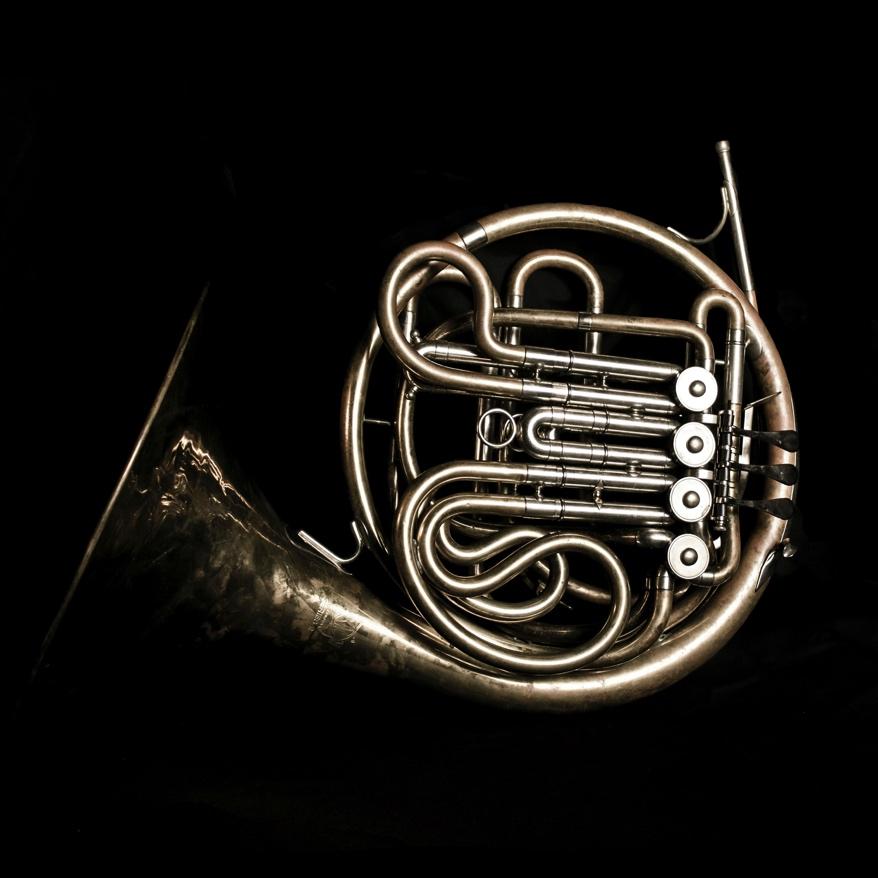
When given the opportunity to create a creative work as a research project in my World War II course, I decided to compose a song. As a French horn player, I chose to write a short, soloistic piece for my instrument that explores how people used music in their day-to-day lives while living through a devastating period of time. Through my research, I learned that music served as a symbol of hope and resilience, a coping mechanism, and a unifying agent. My composition reflects how soldiers and civilians alike, on both sides of the war in Europe and in the United States, used music to find the strength to wake up the next day.
The beginning of the piece is intended to sound harsh and angry, reflecting the awful conditions and struggles people experienced during the war. An interview with Zdenka Fantlova, a Czechoslovakian civilian imprisoned in the Terezin Concentration Camp for her Jewish heritage, inspired the opening/ Fantlova described how music was part of life in the camp, secretly bringing hope and strengthening religious connections between prisoners. Despite the horrendous conditions she encountered, music gave her hope to survive and encouraged her to preserve. I wanted the beginning of my composition to reflect the suffering and fear that surrounded these experiences.
My research also explored how music provided comfort and helped people cope with the lasting effects of war. Chester Sloan, an American World War II veteran who deployed to Normandy shortly after D-Day, described how music gave him the strength to wake up another day and follow commands on the front. He also used music to avoid falling into an alcohol addiction after returning home. Similarly, Minaka Waseda’s research on Japanese American internment camps describes how prisoners composed their own music, drawing on their culture and Western music to cope with the terrible conditions they were forced into. I incorporated silence into my compositions because traditional Japanese music focuses on sound and emotion rather than rhythm, and used rhythms inspired by music created by Japanese Americans in the camps.

Other musical choices reflect how composers and communities used music to express resilience and find unity. Jason Hoffman’s study of composers during World War II particularly interested me in Olivier Messiaen, whose compositions changed from lyrical and mystical works to harsher, more rigid pieces after his service in a hospital in Verdun, France, and his capture. Messiaen incorporated trills representing singing birds, which gave him hope for the future. I included trills as a nod to his work and the ways he coped with the horrors of war. Research by Marty Branagan on women in Nazi-controlled Europe and Francis Steckel on American military bands also inspired the stronger, fuller ending of my piece. Both describe how music encouraged camaraderie, uplifted others, and boosted morale. I used strong articulations, an upbeat style, and brighter dynamic to demonstrate music’s ability to unite people and create a sense of pride and resilience, even during imprisonment and conflict.
Collectively, these interviews, dissertations, and articles inspired this composition. As I conducted my research, I heard the melody in my mind and wrote it out. The dynamics represent the anger and fear of this time while also showing the determination to endure. For soldiers and civilians alike, music was a means to survive until the next sunrise, an integral part of life to encourage survival and hope. My piece also conveys the emotion and hope that people felt as they looked forward to the war ending. Through Hope’s Survival, I composed a piece that reflects this suffering while demonstrating how music created hope out of pain.