
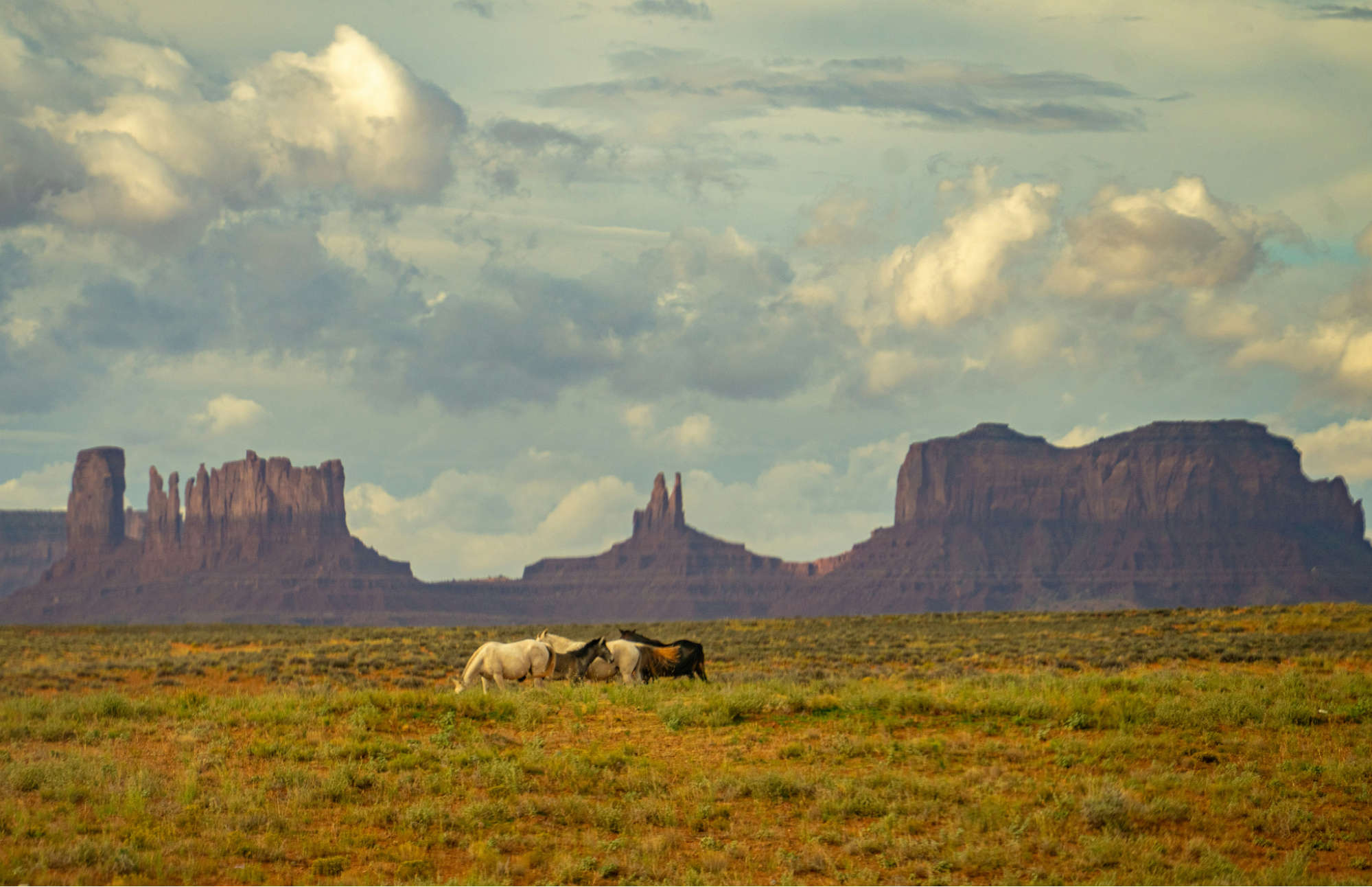
In his 2018 book, Making the Frontier Man, Matthew C. Ward posits that the typified image of the American Western frontiersman is not a natural iteration of masculine expression, but a conscious and deliberate creation devised in the face of uniquely western challenges to American masculinity. During the process of westward expansion, Ward claims characteristics such as the physical toughness to survive in unfamiliar and unfriendly terrain and the ability to claim land through violence against Indigenous people became central to the performance and perception of American masculinity. Ward builds on Raewyn Connell’s concept of “hegemonic masculinity” which posits that male power is ideologically institutionalized in a cultural system, and that within that system, some iterations of masculinity are more prized than others (Ward 11). In the American West of the mid-nineteenth-century, energetic initiative was valued, as well as independence and endurance, and the enthusiastic willingness to commit violence against Indigenous occupants of western land and fellow colonists who competed for resources. These qualities were not nationwide prerequisites for the presentation of perceivable masculinity: they were a set of performances tailored to a western context.
In presenting western masculinity as a collection of established performances rather than an innate essence, Ward is building on the legacy of feminist critique and queer theory. I turn to Judith Butler’s Gender Trouble for a more focused exploration of the concepts upon which Ward is building. In their 1999 preface to Gender Trouble, Butler broadly outlines the two main components of their theory of gender performance. First, Butler identifies a metalepsis around which performativity revolves: the idea that the expectation of a gendered essence produces the outward manifestations supposed to be representative of that essence. Second: that performed gender does not consist of a single action but is rather a series of repetitions, repetitions that are naturalized overtime and that evolve overtime. Thus, gender becomes not an expression of essential internality, but a collection of gestures. These gestures do not arise internally of their own accord; rather, they reflect expectations of gendered performance, imposed from the outside.
Matthew Ward’s exploration of western masculinity neatly aligns with Butler’s view of gender as a performative project. One of the primary focuses of Ward’s work is violence, in its capacity as a masculine characteristic, attributed to or expected of those who went west in search of land, wealth, or freedom. Ward writes that “violence of numerous kinds seems to have been inherent to the culture and identity of the west – and more important, to white western men” (Ward 4). Violence was a necessary component of the project of westward movement. Expansionist pioneers were moving into land already populated by Indigenous people who offered tenacious resistance to the occupation of their territories and the seizure and destruction of natural resources. Conflicts over land use occurred not only between Indigenous people and colonizers, but among individual settlers, who were often compelled to settle their disagreements and claim their purported property through the use of violence. Legal systems and law enforcement in the newly occupied west were sporadic and often not far removed from vigilantism; violent crimes could go unpunished, or self-appointed officers of the law could inflict violent punishment at their own discretion. If a frontiersman was to be successful in claiming territory and defending it, he had to use violence. Overtime, the centrality of violence within frontier life became increasingly understood – especially during peaks in conflict with Indigenous people in the late eighteenth and early-to-mid nineteenth centuries – shared by word of mouth, increased access to newspapers, and rapid methods of communication and travel such as the telegraph and railway transportation. As the story of frontier violence was increasingly proliferated, the assumption that all frontiersmen were violent became a cornerstone of their identification. Whether a man was quick to violence or not, if he was perceived as a frontiersman, violence was often assumed. Butler and Ward’s ideas neatly coalesce here, demonstrating how the quality of violence became naturalized as a signifier of the frontier and the men who established themselves there.
While Ward follows the tradition of Butler in his assertion that gender in the west was constructed and performed, he presents this performance as culminating solely in the development of masculine expression, a claim that falls short of Butler’s more expansive view. Butler’s intention in their theorization of performativity is “to open up the field of possibility for gender without dictating which kinds of possibilities ought to be realized” (Butler viii). Under this view, the gender context of the west could indeed give rise to new masculinities, but it could simultaneously result in the production of other ways of performing gender. This could include iterations of masculinity that differ from those Ward focuses on, as well as new expressions of femininity, and queered gender expressions that diverge from both strictly feminine and strictly masculine performance. In a western context where the performance of gender was contested and developing, the potential for queered or extra-masculine expressions of gender existed alongside the production of new masculinities. Some scholarship, such as Miriam Ableson’s Men in Place: Trans Masculinity, Race, and Sexuality in America draws queerness and western space together. Ableson examines how the idealization of the west as a “pressure valve where urban men could imagine reclaiming a virility supposedly denied in the ever more constrained city” carries implications for the various iterations of trans masculinity present in the United States today (Ableson 29). Even within its examination of queerness, Ableson’s work focuses entirely on masculine formation, and serves a sociological rather than historical function, investigating the west’s implications for contemporality rather than imagining what western queerness could have looked like during the expansion period. Ward and Ableson work in tandem to supply a view of the west in which the performance of gender was highly contested, resulting in new forms of masculine expression and carrying implications for contemporary performances of masculinity. Applying the expansiveness of Butler’s performativity to both demands consideration of how the west could have provoked not only the development of new masculinities, but the expression of extra-masculine and queered gender performance. Sebastian Barry’s 2017 novel Days Without End investigates this largely unexplored area, focusing on a protagonist who participates in the masculinity-forming traditions of the west, but internalizes and embodies them in a decidedly queered fashion.
Days Without End follows the life of an Irish immigrant who comes to the west in mid-adolescence and participates enthusiastically in the project of westward expansion, namely through joining the Army and fighting in the Indian Wars. Participation in this violent and contested masculine space, however, does not lead to the formation of a decidedly masculine identity, but to a gendered performance that surpasses the limitations of the binary, the formation of a lasting and loving queer relationship, and the establishment of non-traditional and tightly knit kinship. Through an historically and theoretically grounded reading of this novel, I will explore how the contested gender context of the west was not only limited to the production of new masculinities, but, through its uncertainty and reliance on the formation of new modes of performance, facilitated queer expressions of gender not accessible in less contested places.
A brief note on names and pronouns before proceeding. There is little to no existing scholarship on Days Without End from which to take guidance on how to refer to the focal character Thomas or Thomasina McNulty. Reviewers tend to exclusively refer to McNulty with masculine pronouns, and, in discussions of gender divergence, conflate McNulty’s gender queerness with queer sexual preference rather than examining the two as distinct experiences. A New York Times review, published in the same year as the book, describes McNulty as “a crack shot, a cross-dresser, and a half-hearted soldier,” and continues, “but mostly, he’s in love with a young man” (Smith 2017). For this reviewer, McNulty’s sexuality subsumes their gender queerness, and “cross-dresser” becomes merely one in a list of characteristics rather than a potential form of identification in its own right. As a definitive counter to this apparent gap in readings of Days Without End, I seriously considered whether to discuss McNulty solely through the lens of transfemininity, using exclusively she/her pronouns and the name Thomasina. I ultimately found this lens to be diminishing, however, for two main reasons.
First: while McNulty finds liberation and comfort in wearing women’s clothing and being at times perceived and addressed as a woman, there are no instances in the novel of anything it seems defensible to categorize as gender dysphoria, that is, discomfort, distress, and disidentification on McNulty’s part with being understood by others as a man. At some times, McNulty is referred to in their own first-person narration as a man, and at other times as a woman, without any suggestion that one of these identifications is more or less true. The conclusion I have reached then, is that at risk of slipping into any binarized understanding of McNulty, and in order to keep their defiance of binaries at the forefront of my argument, I will refer to them using they/them pronouns and their neutral surname. This is not an indication that McNulty uses neutral pronouns in the novel; this choice simply reflects my attempt to defend and emphasize McNulty’s divergence from binarism, a divergence I feel would be misconstrued were I to examine them solely through the lens of transfemininity.
McNulty’s earliest expressions of gender queerness and queer sexuality appear in the novel’s first pages. Only a short time into their residence in America, at the age of roughly fifteen, they are wandering the state of Missouri in “an old wheat-sack, tied at the waist” when they encounter John Cole under a hedge, after ducking beneath it to escape a downpour (Barry 5). McNulty is immediately drawn to John Cole, who is to become their long-term companion and lover. “From the first moment I saw him,” McNulty’s narration recalls, “I thought, there’s a pal” (Barry 3). The two decide to join forces and seek work, a search that leads them to the mining town of Daggsville, Missouri and its newly built saloon, the site of McNulty’s first foray into gender transgression. “Clean Boys Wanted,” a sign in the saloon window proclaims – wanted as semi-drag performers to dance with the miners who spend their nights in the saloon (Barry 5). While this line of work may seem an anachronistic depiction of queer expression in an unfit historical context, Peter Boag points out in his 2011 book Re-Dressing America’s Frontier Past, that such modes of cross-dressing employment were not unheard of, and indeed widely practiced “during the early days of western settlement” (Boag 58). Men who dressed as women “strictly to entertain,” Boag writes, “took the role of women at soirees on the gold-rush frontier or on the dusty cattle trail, where women were in short supply but the men wished to have a dance anyway” (Boag 58). This focus on the lack of and desire for the presence of women then, removed the suggestion of queerness from this gender-transgressive and homosocial mode of performance, and centered it firmly in the context of heterosexuality. The men who donned dresses and danced in saloons were no less men because of their chosen work, and while queer sex must surely have resulted, at least on occasion, from this practice, the purpose was entertainment, not intimacy. As Mr. Noone, the saloon proprietor assures McNulty and John Cole, “They [the miners] need only the illusion . . . of the gentler sex . . . No kissing, cuddling, feeling, or fumbling” (Barry 8).
While the queer implications of kissing and cuddling with the miners are not among McNulty’s interests, they carry the gender transgression of their new profession beyond the sanctioned realm of illusion. “As soon as we hove into those dresses,” they recall, “everything changed. I never felt so contented in my life” (Barry 10). In their “buttons and ribbons and such,” their “yellow wig of hair,” and their “bodice filled out with cotton,” McNulty feels “dainty, strong, and perfected” (Barry 9, 10). Throughout McNulty and John Cole’s “dancing days” there is never any indication that the miners truly believe their dancing partners to be women; yet this does not diminish the comfort and delight McNulty takes in their new attire, or the enlarged understanding of themself that they don with their dresses (Barry 2). The possibility of this expanded self-expression is directly tied to the physical space of the west – its requisite play with gender in the absence of women, and the transient nature of those who move through it. When “the bloom w[ears] off” McNulty and John Cole, when they mature enough to appear “more like boys than girls, and more like men than women,” they leave their jobs with Mr. Noone and attach themselves to another decidedly western employment: membership in the United States Army in its campaign against western Indigenous peoples (Barry 12). The two leave Daggsville early one morning when the town is deserted. There is no one present to mark their departure. “We knew,” McNulty recounts, “we was just fragments of legend and had never really existed in that town. There is no better feeling” (Barry 13). Through its decided lack of feminine presence, the intensely masculine space of the west contradictorily offers McNulty the ability to explore and identify with queer variants of gender performance, and the centrality within the west of transience and movement allows them to carry that performance with them into other western spaces.
While transition from the gender expansive space of the Daggsville saloon to the violent and (in theory) exclusively male context of the military may seem a move on McNulty’s part towards identification with the masculine formations of western space, this context too facilitates their arrival at queer forms of expression. McNulty and John Cole’s participation in the Indian Wars leads the pair to the informal adoption of Winona, an Indigenous child kidnapped from her own family by the very Army in which they serve. The violence of the Army’s encounters with Indigenous people is painstakingly recounted in Barry’s novel, as well as McNulty’s willing participation in it and the pride they take in their capacity for violence. Early in the novel, they note with pride their expert marksmanship, boasting that they can “hit a hare dead” at a hundred feet with “no trouble” (Barry 17). In the first military engagement McNulty recounts, a bayonet charge on a group of Indigenous women and children, they describe feeling “astonished at the speed and horror of the task, and the exhilaration [emphasis added] of it” until the point at which they realize whom their attack has been made against (Barry 31). Richard Slotkin, in Gunfighter Nation, a 1998 exploration of the intricate relationship between violence and the formation of the American West, uses the term “savage war” to describe the perspective westward movers brought to the reality of violence perpetrated against Indigenous people (Slotkin 11). Slotkin claims that this understanding framed a “complete American” as one who had “defeated and freed himself from the ‘savage’ of the western wilderness” (Slotkin 11). This “complete American,” although Slotkin does not specify this, would, of course, have been a man, and the violence in which he engaged would not only have cemented his Americanism, but his masculinity as well. Thus, in McNulty’s enthusiastic participation in aggressive conflict with Indigenous people and the pride they take in their prowess in doing so, McNulty seems to be situating themself in alignment with the western formation of masculine performance.
Yet their relationship with Winona, claimed through the violence in which they take part, troubles and queers this understanding. After their adoption of her and their departure from the Army, McNulty, John Cole, and Winona fall into a pattern that loosely resembles that of a heteronormative nuclear family. Reuniting with Mr. Noone in his most recent entrepreneurial endeavor, a travelling performance troop that tours western dance halls, the trio takes to the stage, with McNulty once again in women’s attire, John Cole taking the part of their lover, and Winona in “the child part” (Barry 106). Once more, the intensely masculine space of the west contradictorily facilitates McNulty’s increased expression of gender queerness; on the road as in Daggsville, the absence of women’s presence gives them leave to openly inhabit a queered role. During the period of western expansion, especially in temporarily settled areas such as mining towns, women were predominantly present in the role of sex workers. In her 2009 article “Historical Perspectives on Industrial Development, Mining, and Prostitution,” Julia Ann Laite claims that “prostitution is coming to be recognized by some historians not only as a side note to the historical mining region but . . . as one of its defining features,” and identifies prostitution’s prevalence as largely the result of “the exclusion of women from the licit profits of the mining enterprise” (Laite 743, 744). Women who worked as prostitutes in the nineteenth-century west obviously fulfilled the sexual desires of mining men. Yet even considering the predominance of sex work in the west, the institution of heterosexual relationship was not a possibility for most westward movers who had not yet claimed land and established homesteads for their families. Thus, in their fictious family performance with Winona and John Cole, McNulty is simultaneously more fully expressing their own queerness and offering a male audience the illusion of familial heteronormativity barred from them by their participation in westward movement. At the close of their first performance, a pantomime romantic scene between McNulty and John Cole, McNulty reflects that while the enraptured audience is aware of the illusion before them, aware that McNulty is not a woman, the crowd still wholeheartedly invests itself in the display of love enacted before them. “There is a craziness in it all,” McNulty reflects, “that betokens a kind of delicious freedom. Notions are cast off. If only for a moment” (Barry 112). This illusory actualization by the audience of the romantic love between McNulty and John Cole and the pair’s parental care for Winona reflects the ever-strengthening – and decidedly queer – form of kinship the three have come to inhabit.
Partially through this unexpected affirmation of kinship, and the ways in which it cements the trio’s unconventional familial ties, McNulty comes to identify the violence that brought Winona to them as a “colossal-sized crime” and to understand their feelings of care for her as primarily maternal (Barry 116). From their first violent engagement with Indigenous people, McNulty experiences feelings of remorse, identifying themself and their military companions as “killers, like no other killers that had ever been” (Barry 32). Yet the moment that appears to cement their abhorrence of expansionist violence comes shortly before – and appears to influence – their adoption of Winona. A leader and representative of the Oglala people with whom the military frequently engages, Caught-His-Horse-First, comes to the army’s temporary quarters to negotiate the return of his captured daughter. The negotiation begins peacefully but ends in gunfire; Caught-His-Horse-First’s young daughter is shot and killed. The murder of this child lingers with immense heaviness in McNulty’s memory. “Forever more,” they write, “the chief will turn his horse side on and look back at us holding the body of his dead child . . . and forever more the black clouds of evening be stilled in the firmament and God yet again retreat from us” (Barry 97). Their adoption of and fierce protective care for Winona appears to be, in part, their attempt to atone for their role in this previous death. “A daughter not a daughter,” McNulty calls Winona, “but who I mother best I can” (Barry 236).
It is crucial here to avoid instrumentalizing Winona as merely one facet of McNulty’s evolving gender performance or suggesting that her adoption is able to make right the immense wrongs in which McNulty has participated. In fact, a predominant critique of Barry’s novel is its handling of Winona; as reviewer Katy Smith succinctly puts it: “That two strange white men can so neatly become her parents belies the trauma of Indian dislocation” (Smith 2017). By folding Winona into their family, McNulty and John Cole introduce another expression of queerness into their family, yet simultaneously diminish Winona’s indigeneity in a number of ways. In her 2020 book Relative Races: Genealogies of Interracial Kinship in Nineteenth-Century America, Brigitte Fielder writes that “race is not simply constructed according to heteronormative trajectories,” but “follows different lineages in narratives of interracial kinship” (Fielder 3). She goes on to claim that “race is not constructed according to mere biology, or even within individual bodies, but in the relations between racialized bodies” (Fielder 3). In their adoption of Winona, McNulty and John Cole are not only increasing the queered gender and sexual dynamics of their relationship but queering the racial dynamics of their kinship as well. While this may seem like a potentially liberatory development, in which each member of the trio experiences growth and an increased understanding of their kin, McNulty and John Cole here demonstrate an inability to fully escape the assumptions and priorities of white westward movement. Unable to “get [their] tongue around her Sioux name,” McNulty christens their adopted daughter Winona – hauntingly the name of Caught-His-Horse-First’s murdered daughter – and later the pair assigns her “Cole” as a surname, simultaneously reinforcing her separation from her prior family and the establishment of the trio as modeled on a traditional family, with John Cole as the father and Winona as the bearer of his name. In preparation for Winona’s participation in their theatrical endeavors with Mr. Noone, McNulty purchases her a “nice pink flouncy dress” and has her “straight black hair cut nice” (Barry 103). While these actions are queered by McNulty’s motherly-identified delight in them, the cutting of Winona’s hair especially reinforces the correlation in Barry’s novel between queer modes of expression and the expansionist and assimilationist project of the west. Through the kinship bonds McNulty forms with Winona, bonds born from their participation in the masculinity-forming context of western violence, McNulty arrives at a decidedly un-masculine and decidedly queer performance of gender and kinship, yet still participates in distinctly western attitudes towards indigeneity and assimilation.
Richard Slotkin, in his 1973 book Regeneration Through Violence, the precursor to Gunfighter Nation, writes that westward movers saw western space as “an opportunity to regenerate their fortunes, their spirits, and the power of their church and nation” and that “the means to that regeneration ultimately became the means of violence” (Slotkin 5). Matthew Ward expands on Slotkin’s ideas, tying the regenerative properties of the west and the violence inherent in their pursuit of the formation of new and uniquely western masculinities. Other scholars such as Peter Boag, have contested that not only new masculinities, but new iterations of queerness arose within this contested space, and were viewed as “diametrically counter to what the frontier and the American West were coming to symbolize” (Boag 337). While any definitive statement of what the American West symbolizes is impossible to inarguably express, more contemporary forms of media that deal with western queerness, such as Thomas Savage’s 1967 novel The Power of the Dog or Ang Lee’s 2005 film Brokeback Mountain appear to reflect Boag’s assertion, that overtime the west has become a space in which queerness is unwelcome, and must be hidden, suppressed, or violently punished. Yet Sebastian Barry’s Days Without End troubles the assertion that the western frontier is inherently opposed to the expression of queerness. Throughout the novel, it is conditions facilitated by the western space – transience, the absence of women, the necessity of violence, and nontraditional forms of racial kinship – that allow McNulty to discover and express their queerness. It is difficult to reconcile the applause McNulty is greeted with when dancing in a dress or the adoration heaped on their theatrically presented queer family, with a west that is diametrically and violently opposed to queerness in any form. The western frontier undoubtedly relied upon and promoted the development of new masculinities – masculinities that have, overtime, largely come to represent antipathy toward queerness. Yet, through my reading of Days Without End, I argue that the contested space of the west in the nineteenth century led not only to the formation of masculine performance, but facilitated the development of new, queered modes of expressing and inhabiting gender. These modes did not run counter to the character of the west, but were inextricably linked to its contestation. This contestation did not end when the frontier closed in 1890; in western texts, conditions that facilitate queerness can still be sought, and found.
Works Cited
Ableson, Miriam. Men In Place: Trans Masculinity, Race, and Sex in America. University of Minnesota Press, 2019.
Barry, Sebastian. Days Without End. Faber and Faber, 2016.
Boag, Peter. Re-Dressing America’s Frontier Past. University of California Press, 2011.
Boag, Peter. “The Trouble with Cross-Dressers: Researching and Writing the History of Sexual and Gender Transgressiveness in the Nineteenth-Century American
West.” Oregon Historical Quarterly, vol. 112, no. 3, 2011, pp. 322-339, doi.org/10.5403/oregonhistq.112.3.0322.
Butler, Judith. Gender Trouble: Feminism and the Subversion of Identity. Routledge, 1990.
Fielder, Brigitte. Relative Races: Genealogies of Racial Kinship in Nineteenth-Century America. Duke University Press, 2020.
Laite, Julia Ann. “Historical Perspectives on Industrial Development, Mining, and Prostitution.” The Historical Journal, vol. 52, no. 3, 2009, pp. 739–61, doi.org/10.1017/S0018246X09990100.
Slotkin, Richard. Gunfighter Nation: The Myth of the Frontier in Twentieth Century America. University of Oklahoma Press, 1998.
Slotkin, Richard. Regeneration Through Violence: The Mythology of the American Frontier, 1600-1860. University of Oklahoma Press, 2000.
Smith, Katy Simpson. “A Dreamlike Western With a Different Kind of Hero.” The New York Times, 3 Feb. 2017. NYTimes.com, http://www.nytimes.com/2017/02/03/books/review/days-without-end-sebastian-barry.html.
Ward, Matthew C. Making the Frontier Man: Violence, White Manhood, and Authority in the Early Western Backcountry. University of Pittsburgh Press, 2023.