
Abstract
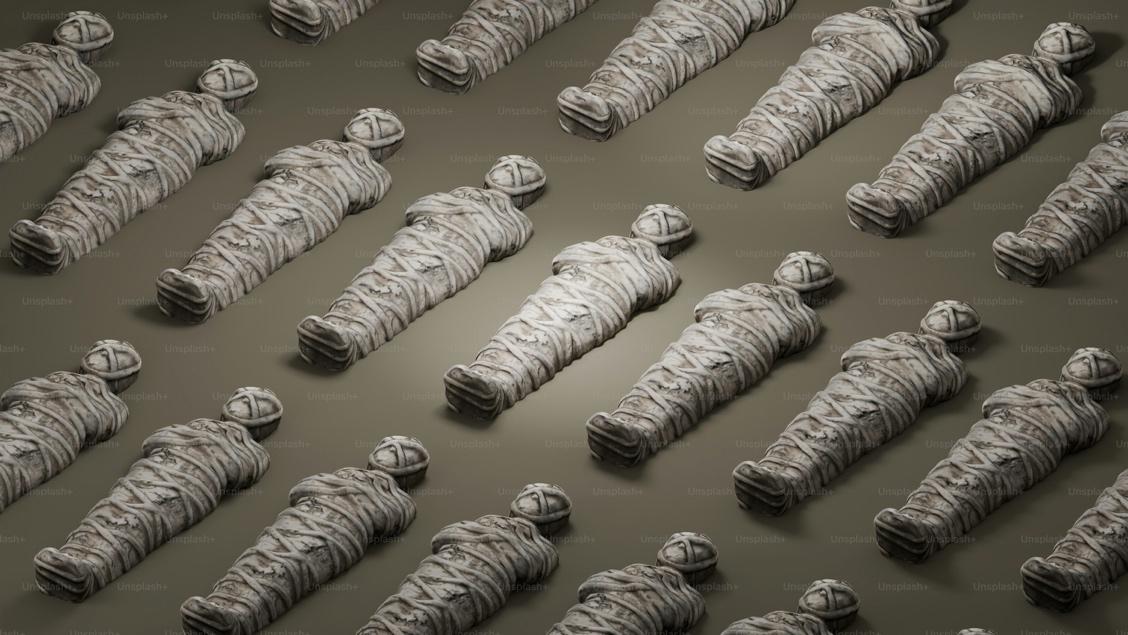
One of the biggest concerns of any religion is death and what, if anything, comes after life. The ascetic Buddhist monks of Northern Japan have pushed the limits of what the body can handle, testing death itself. Sokushinbutsu refers to the practice of reaching an enlightened state through deep meditation that transcends the realm of the living. Thought to have not truly died, but to have physically moved on, a small population of Buddhist monks in the Three Mountains of Dewa of Northern Japan go through a process of self-mummification to immortalize their spirits as worshippers of Buddha. This paper will discuss the historical context of Sokushinbutsu, the physical process of Sokushinbutsu, and philosophical interpretations, such as holism vs. dualism, of the ethics in using the body in religious practices such as Sokushinbutsu. Sokushinbutsu immortalizes both physical human suffering and great mental fortitude into a symbol of worship and pious devotion that is inherently political.
Is Self-Mummification Ethical?: The Politics of Sokushinbutsu
One of the biggest concerns of any religion is death, and what, if anything, comes after life. The ascetic Buddhist monks of Northern Japan have pushed the limits of what the body can handle, testing death itself. Sokushinbutsu refers to the practice of reaching an enlightened state through deep meditation that transcends the realm of the living. Thought to have not truly died but to have physically moved on, a small population of Buddhist monks in the Three Mountains of Dewa of Northern Japan go through a process of self-mummification to immortalize their spirits as worshippers of Buddha. This paper will discuss the historical context and physical process of Sokushinbutsu. It will also delve into philosophical interpretations of holism vs. dualism and the ethics in using the body in religious practices. Sokushinbutsu immortalizes both physical human suffering and great mental fortitude into a symbol of worship and pious devotion that is inherently political.
Historical Context
Japan in the early 1600s was entering the Edo period. This was at the height of popularity for the practice of Sokushinbutsu, though the first recorded instance of it was in 1363 (Nakajima 81). During the Edo period, the Tokugawa family ruled over as the first edition of Shoguns in Japan. During the late 1500s, Japan did a considerable amount of trading with Portugal, which led a slew of Christian missionaries directly into Japan. These missionaries used aggressive tactics to convert Japanese citizens to Christianity. They also involved themselves in political matters and posed as a threat to the Shogun’s power. To combat this, the Shogun enacted the exclusion policy of 1614. This policy banished the missionaries, persecuted those who would not abandon their Christian faith, and shut themselves off to the outside world all together (Whitney).
In absence of the Christian faith, Buddhism was able to gain massive popularity in Japan. The exclusion policy, alongside Buddhism’s growing influence, contributed to the development of various Buddhist subgroups, one of which was ascetic Buddhism. This practice focuses on self-discipline and meditation to reach enlightenment. The belief comes from the idea that when releasing oneself from earthly attachments and desires, one will suffer, but this suffering will lead to liberation and enlightenment called Nirvana. The idea of intense self-discipline and punishment led to the formation of some sects of intensely devout groups of Buddhist monks. The Yamabushi monks, also known as Buddhist Mountain ascetics of the Dewa Sanzan range, follow this model. Dewa Sanzan is a group of three mountains, Mount Yudono, Mount Haguro, and Mount Gassan in the Yamagata Prefecture in Northern Japan. Of the 16 successful cases of Sokushinbutsu, 10 of them are known to have taken place on Mount Yudono (Mt. Yudono: Where We Encounter Our Future Selves). Therefore, this work will primarily focus on the training and preparation for Sokushinbutsu done on Mount Yudono and the surrounding Dewa Sansan mountains.
The Process of Sokushinbutsu
The Yamabushi monks would start their journey into Sokushinbutsu in two steps of austerity: mokujiki-gyō or “wood-eating” and sanrō or mountain confinement. For the first of the austerities, mokujiki-gyō, monks were prohibited from eating meat, alcohol, and the “Five Cereals” which included rice, wheat, soybeans, adzuki beans, and black sesame seeds. Later in their journey, it was unlawful to eat the five plants: buckwheat, barnyard grass, millet, foxtail millet, and corn. This, combined with the first “Five Cereals,” formed the total “Ten Cereals” that were not to be consumed by the mountain ascetics. To fill in their diet, these monks consumed nuts, roots, and pine bark, which is where the name mokujiki-gyō (wood-eating) comes from (Clements 33).
This dietary regime served two main purposes for the monks. It started the preservation process on their body, as the consumption of only nuts, roots, and bark lowered the monk’s body fat levels and prepared the body to combat decomposition in the afterlife. The diet also served as way to let go of worldly pleasures and embrace suffering. Asceticism is based on strict discipline and self-denial. The monks’ commitment to keeping such a restrictive diet throughout their 1,000 to 3,000 days of preparation proves the extent of their dedication. (Nakajima 81).
The second step in austerity is the sanrō, or mountain confinement. The ascetic monks would isolate themselves on Mt. Yudono for thousand-day intervals (Clements 33). While they stayed in designated lodging, they were in solitude and spent their time meditating and reciting the Mahdvairocana Sutra. Three times a day the ascetics would perform ablutions and sutra chanting under ice-cold waterfalls before traveling to the nearest shrine (Dahl 299).
This practice had more of a singular purpose: to prepare the monk’s mental fortitude for the rest of the process of Sokushinbutsu. Self-isolation for thousand-day intervals was not only mentally demanding, but also physically taxing, as they were not allowed to receive any medical care during those thousand days. As the monks were confined in mountain dwellings year-round, the winter would come, and many monks would pass away with it. To honor their dedication, the monks who passed away during the Sokushinbutsu process were buried with stone monuments commemorating their efforts (Clements 33).
After the thousand-day intervals of isolation and extreme dieting, the monks were ready to move onto the next step. The ascetics would spend 42 days fasting on only salt and water and end their preparation by drinking lacquer. This fasting schedule combined with the lacquer was to prepare the body for mummification, depleting the body of any fat or any nutrients that would keep the body from preserving (Dahl 299).
Now that the monks were finally prepared, they could start the Sokushinbutsu ritual. The prospective mummy was buried in a wooden coffin suspended inside of a cell built of 28 stones (Castiglioni 33). The coffin was several meters below the surface and was fashioned with a singular bamboo tube that was used to allow oxygen to enter. The bamboo tube was also in place so that those above could hear the bell that functioned as an alert when the buried ascetic needed water (Dahl 299). The monk would then meditate and chant Buddhist sutras until their last breath, starving to death. When the bell rings were no longer audible by those from above, those who attended the ritual would take away the bamboo tube and completely seal the tomb. After three years and three months, the monks would exhume the body, examine to see if the body has mummified, and if it had, they would dress the corpse in robes and place him in a temple to show off as a symbol of devotion and holiness (Clements 34).
Philosophical Interpretations
When the monks died, it was not seen as a true death. When an ascetic successfully completed the Sokushinbutsu ritual, he entered the state of dochū nyūjō, which is also known as having entered a “deep meditation within the earth,” or “meditative entry into another world” (Clements 34). When the monk is in the state of nyūjō, he is neither dead nor alive because in Buddhism, death only occurs when the soul has left the body. During Sokushinbutsu, part of the essence of the soul stays in the body, so the mummified monk is neither dead nor alive, landing somewhere in between the two realities (Nakajima 82). This suspension of mortality leads to many believing that the monk who has undergone Sokushinbutsu is immortal, in the sense that he will never be dead. The monk’s soul now waits for the Future Buddha to come so he can serve and worship him. This enlightened being’s duties are also to look after the temple and patrons in the Buddha’s absence (Dahl 300).
In dualistic philosophy, the body and the mind are separate entities; they not only have distinct functions but are completely independent of each other. In dualism, the mind and the body are combined to create what we call the soul. The mind thinks and the body does not, therefore they are separate with opposing functions (Winter). This understanding of the body comes from a Western perspective, finding its origins with the ancient Greek philosopher Plato and going on to have strong connections to Cartesian philosophy.
Under this lens, the ritual of Sokushinbutsu seem overly morbid and ethically disturbing. Looking at these mummified monks from a dualistic perspective, it seems like the ritual treats the physical body as expendable, something that can be sacrificed for the sake of the mind’s development. The monk staving and isolating himself could be viewed as a rejection of the body itself. The body is simply a sacrifice in order to reach enlightenment. If the body is a separate entity, then Sokushinbutsu could be interpreted as a self-harm ritual that is justified by the mind’s spiritual goals. The body would not share these goals, as it cannot think and is separate from the mind.
This dualistic perspective does not align with much of Buddhist theory. Buddhists are more apt to believe in holism, which is the idea that the body and mind are simply parts of the soul. These are dependent on one another, and the soul is more than the sum of its parts. The theory stemmed from ancient Greek philosophers who believed the universe was made of atoms. These atoms by themselves meant nothing, but when they were combined with one another, they created everything our universe was, including humans (Sheposh). While holism also originated in ancient Greece, it has since been adapted by many Eastern religions such as Buddhism and Daoism. In Buddhism, holism refers to how the body and the mind are interconnected, meaning that they cannot be affected separately.
In this holistic understanding of the body, for any spiritual experience to be truly complete, it must affect every section of the human: mind, body, and spirit. In contrast to the dualistic way that the body is simply a second thought to the mind’s enlightenment, in Buddhist holism, the body is integral and an active part of enlightenment. Through this philosophical lens, Sokushinbutsu is not aimless physical suffering, it a method of spiritual refinement. With this understanding, the strict diet, isolation, and mummification are not needless torture, but are simply apart of the training in mental and physical fortitude. The monk’s physical suffering has meaning because it is intricately connected to the mind’s spirituality. The concept of dochū nyūjō (meditation within the earth) also comes back into the conversation as it shows exactly how the Buddhist’s embrace holism into their theology. The monk is not fully dead, because his soul has not fully moved on to another life. The soul is still tied to the body, so therefore it is not gone. If even one part of the whole is left behind, it cannot be considered fully parted.
Holism provides Sokushinbutsu with the ability to reframe the ethics and morality of the ritual. Aside from the fact that the ritual is completely consensual, as the monk is given many opportunities to back out or reconsider, every part of Sokushinbutsu is intentional to the greater enlightenment. The suffering that is endured is purposeful. Every trial is made to test not only the mind, but also the physical body, as they are interconnected.
Conclusion
Sokushinbutsu cannot escape the historical or political context of itself. Sokushinbutsu was at its most popular in the early 1600s, which was also a very historically momentous time for Japan. Japan was isolating itself from Western influences and embracing Buddhist and Confucian ideologies. The monk’s mummies put on display were not only spiritual symbols, but also political ones. Furthermore, monks not only consented to the ritual of Sokushinbutsu while they were living, but also in physical death. The monk’s mummified body would be put on display for worshippers and tourists to see. Today, there is still a mummy on display in the temple Danichibō, located near Mount Yudono (Dahl 294). The presence of such a spiritually charged figure evokes strong emotions that influence one’s understanding of the historical context in which the ritual happened. Using a real human body in an exhibit carries a significant political message along with it: these monks were so incredibly devoted to their religion that they would rebel against their own government (remember that Sokushinbutsu as a ritual was against Japanese law) and sacrifice their own bodies. Sokushinbutsu is devotion of the highest degree, a devotion that transcends mortality and what is known about death.
Works Cited
Castiglioni, Andrea. “Devotion in Flesh and Bone: The Mummified Corpses of Mount Yudono Ascetics in Edo-Period Japan.” Asian Ethnology, vol. 78, no. 1, Jan. 2019, pp. 25–51. EBSCOhost, research.ebsco.com/linkprocessor/plink?id=01afec3c-faa8-39f1-a777fce302149ce6.
Clements, Frank W. “The BUDDHAS of MOUNTYUDONO.” Expedition, vol. 58, no. 2, Sept. 2016, pp. 30–34. EBSCOhost, research.ebsco.com/linkprocessor/plink?id=010e856c71a9-3c0f-8d10-f8aedb98ee14.
Dahl, Shayne Allan Peter. “Ascetic Ressentiment: Historical Consciousness and Mountain Politics in Northeastern Japan.” History & Anthropology, vol. 34, no. 3, July 2023, pp. 353–71. EBSCOhost, https://doi.org/10.1080/02757206.2021.1881081.
Dahl, Shayne A. P. “Buddhist Mummy or ‘Living Buddha’? The Politics of Immortality in Japanese Buddhism.” Anthropological Forum, vol. 30, no. 3, Sept. 2020, pp. 292–312. EBSCOhost, https://doi.org/10.1080/00664677.2020.1786804
“Mt. Yudono: Where We Encounter Our Future Selves.” Dewa Sanzan, dewasanzan.com/home/yudono/. Accessed 16 Dec. 2025.
Nakajima, Nanako. “The Outside of Butoh Is the Inside of the Body: Ko Murobushi and the Process of Self-Mummification.” TDR: The Drama Review (MIT Press), vol. 63, no. 3, Sept. 2019, pp. 74–93. EBSCOhost, https://doi.org/10.1162/dram_a_00857.
Sheposh, Richard. “Holism.” Salem Press Encyclopedia, Oct. 2025. EBSCOhost, research.ebsco.com/linkprocessor/plink?id=253bf3fc-3527-30ac-9d98-2708437fc31a.
Whitney, John. “Historical Background of the Edo Period (1615–1868) – Education – Asian Art Museum.” Historical Background of the Edo Period, education.asianart.org/resources/historical-background-of-the-edo-period/. Accessed 15 Dec. 2025.
Winter, Max. “Dualism (Philosophy of Mind).” Salem Press Encyclopedia, Sept. 2022. EBSCOhost, research.ebsco.com/linkprocessor/plink?id=e16e744b-c804-3516-867760a6bb731607.