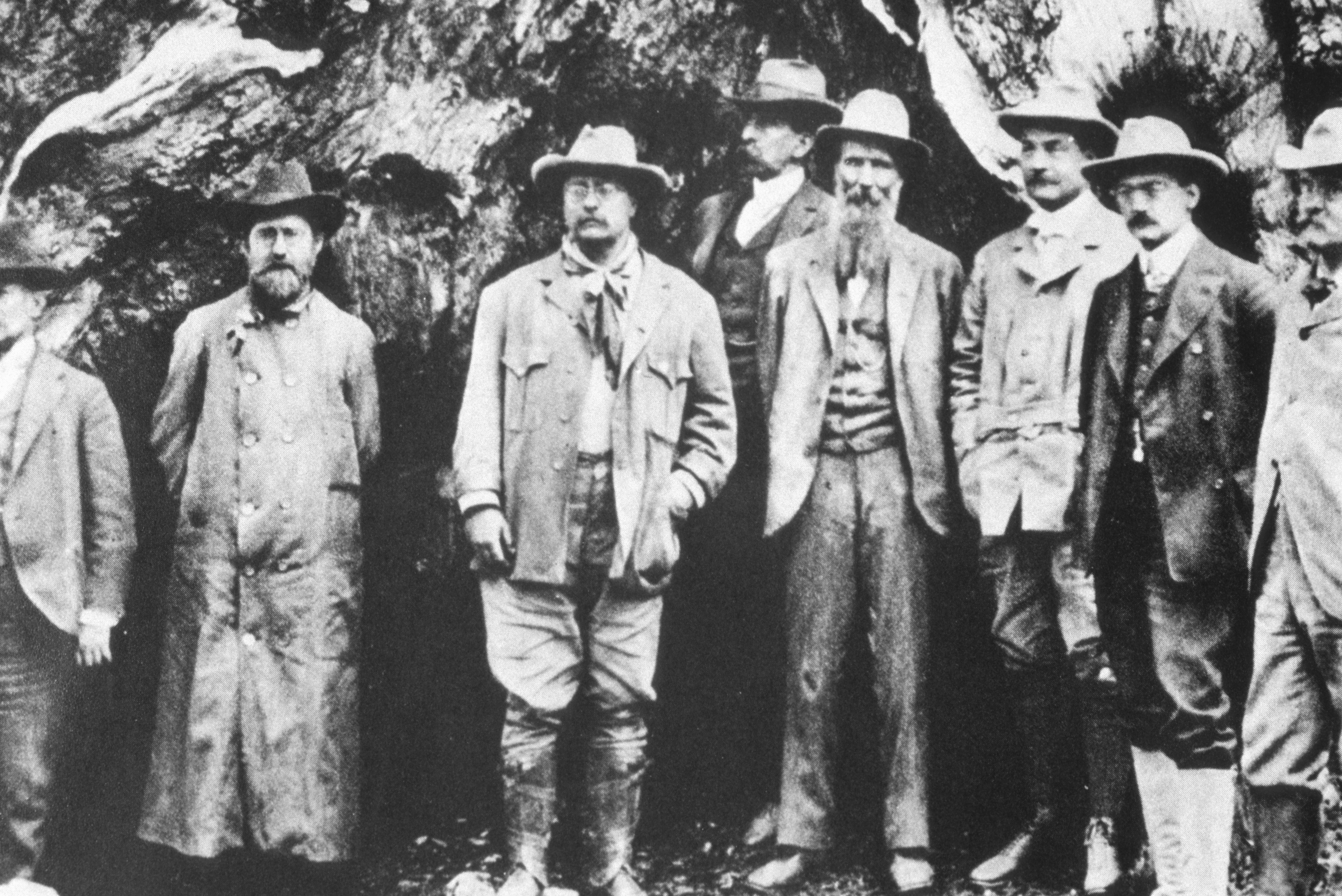
In the early 20th century, as the United States grappled with accelerated industrialization and the fading frontier, Theodore Roosevelt and John Muir created an unlikely union that would redefine the nation’s relationship with its natural landscapes. Their partnership, founded on a shared respect for the feral beauty of the American wilderness, not only resulted in the modern conservation movement but also imprinted the idea of preservation into the national consciousness.
As Roosevelt and Muir’s efforts developed in the creation of national parks and protected lands, though, a deeper friction loomed. A narrative of wilderness as an immaculate, uninhabited space developed that often expunged the presence and rights of Indigenous peoples. This research explores how the collaboration between Roosevelt and Muir helped elevate environmental issues to the national stage, fostering a cultural appreciation for wilderness and leading to significant political achievements in conservation. However, their partnership also reinforced a narrative of wilderness preservation that largely excluded Indigenous peoples and marginalized communities, highlighting the need for a more inclusive approach to environmental policy in the United States.
Before Roosevelt and Muir linked to champion the preservation of America’s wilderness in the early 20th century, Indigenous peoples had a thorough and everlasting presence across the United States, sculpting the landscapes that would later become national parks through millennia of tenable land management. Tribes like the Yosemite Miwok in California and the Blackfeet in Montana lived in deep connection with their environments, using controlled burns to manage forests, cultivating native plants, and sustaining biodiversity through orthodox ecological knowledge. These practices not only sustained their communities but also created the very “pristine” landscapes that Euro-American settlers later glamorized as untouched wilderness. However, as European colonization spread, Indigenous populations faced displacement and violence, with their administration of the land often dismissed or erased from historical narratives (Anderson 2005).
Marginalized communities, including African Americans and poor European immigrants, also had a significant, though often overlooked, presence in the American landscape prior to the conservation movement. In the South, enslaved African Americans crafted the environment through forced labor on plantations, transforming wetlands and forests into agricultural fields, while their cultural practices, such as foraging and herbal medicine, demonstrated a profound knowledge of local ecosystems. In the same way, in rural areas of the Appalachians and the Midwest, poor immigrant families depended on conventional lands for hunting, fishing, and gathering, commonly clashing with incipient property laws that favored wealthier landowners. These groups, though essential to the land’s history, were seldom regarded in the view of wilderness preservation that Roosevelt and Muir would later support, as their presence was seen as incompatible with the ideal of an uninhabited nature (Merchant 2003).
The exclusion of Indigenous peoples and marginalized communities from the narrative of American wilderness was not by chance but implanted in the cultural and political ideologies of the 19th century, which prioritized Manifest Destiny and the concept of an empty frontier. As the U.S. government legislated policies like the Indian Removal Act of 1830, whole tribes were forcefully relocated from their ancestral lands, making way for settler expansion and eventually the establishment of national parks. Meanwhile, marginalized rural communities faced enclosure of public lands and criminalization of traditional subsistence practices, estranging them from the landscapes they depended on. This systematic expunging laid the groundwork for a conservation movement that often ignored the human history rooted in these lands, leading to Roosevelt and Muir framing preservation as a return to a mythical, uninhabited wilderness (Spence 1999).
The Legacy of Theodore Roosevelt and John Muir in Conservation
Roosevelt, often called the “conservation president,” played a monumental role in protecting America’s natural landscapes by establishing and expanding national parks during his presidency from 1901 to 1909. Driven by a passion for the outdoors and a belief that nature should be preserved for future generations, Roosevelt used his executive power to create five national parks, including Crater Lake in Oregon and Mesa Verde in Colorado, which safeguarded unique geological and cultural sites. Beyond parks, he designated over 150 national forests and established the United States Forest Service to manage public lands sustainably. His valiant actions, like setting aside millions of acres through the Antiquities Act of 1906, laid the foundation for a national promise to conservation, even when faced with resistance from profit-seeking industrialists and developers (Brinkley 2009). Additionally, Roosevelt’s creation of 51 federal bird reserves marked an early recognition of the need to protect wildlife habitats from widespread hunting and development (Cutright 1985). His administration also supported the protection of over 230 million acres of public land, an exceptional achievement that approximately doubled the amount of federally protected territory at the time (Morris 2001). Even more, Roosevelt’s partnership with Chief Forester Gifford Pinchot helped institutionalize scientific management of natural resources, ensuring that conservation was not just a temporary effort but a long-term policy (Hays 1959). Importantly, his recurrent public speeches on the significance of preserving America’s natural beauty helped stimulate public support and turned conservation into a uniting national value (Rothman 1989).
Muir, a naturalist and writer, was also a resolute advocate for wilderness preservation, and his poetic accounts of places like Yosemite Valley inspired a generation to treasure unimpaired nature. Commonly called the “Father of the National Parks,” Muir founded the Sierra Club in 1892 to protect America’s wilderness and spent decades campaigning against the devastation of forests and mountains by logging and dam projects. His personal influence on Roosevelt was impactful; during a famous 1903 camping trip in Yosemite, Muir shared his vision of nature as a sacred space, goading Roosevelt to protect it from commercial exploitation. This direct appeal helped shape Roosevelt’s conservation agenda, as Muir’s writings and activism gave a moral and emotional weight to the idea that wilderness merited to be saved for its own sake, not just for human use (Worster 2008). Also, Muir’s all- embracing essays and books, like The Mountains of California, painted lurid pictures of the Sierra Nevada, stimulating public sentimentality and creating a wider cultural movement to preserve natural landscapes (Cohen 1984). His resolute objection to the proposed Hetch Hetchy Dam in Yosemite, though unsuccessful, sparked national debate over the morality of sacrificing wilderness for urban development (Righter 2005). Moreover, Muir’s advocacy helped obtain federal protection for Yosemite as a national park in 1890, a momentous victory that set a paradigm for future park designations (Runte 1990). At long last, through the Sierra Club, Muir organized grassroots efforts to lobby Congress and guaranteed that conservation remained an important political issue during and after his lifetime (Turner 1985).
The partnership between Roosevelt and Muir rendered personal passion into forceful political action, resulting in breakthrough conservation policies that changed how America viewed its natural heritage. Their collaboration culminated with initiatives like the expansion of Yosemite National Park and the protection of enormous regions of land under federal control, often against strong resistance from business interests. Roosevelt’s administration, influenced by Muir’s principles, pushed through the creation of several national monuments and wildlife sanctuaries, while also fortifying laws to prevent overgrazing and deforestation on public lands. Conjointly, they helped institute conservation as a national priority and grafted the idea that the government had a duty to safeguard the environment—a legacy that continues to influence environmental policy today (Fox 1981). Their efforts directly led to the designation of symbolic areas like Devils Tower as the first national monument in 1906, emphasizing the power of the Antiquities Act to preserve cultural and natural spectacles (Harmon et al. 2006). Their advocacy contributed to the establishment of the National Park Service in 1916, securing a dedicated agency to manage and protect conservation areas long after their time (Sellars 1997). Their influence also encouraged the passing of legislation like the Forest Reserve Act amendments, which expanded federal authority over millions of acres of forestland during Roosevelt’s tenure (Steen 2001). Ultimately, their collaboration supported a bipartisan recognition of conservation’s importance, as demonstrated by congressional support for initiatives like the creation of Glacier National Park in 1910, stimulated by the groundwork they had laid together (Diettert 1992).
The Narrative of Wilderness Preservation
The concept of wilderness preservation, backed by characters like Roosevelt and Muir, often disregarded the presence and rights of Indigenous peoples who had lived on and cared for these lands for thousands of years. The idea of wilderness as an empty, untouched space disregarded the fact that Native American tribes like the Ahwahneechee in Yosemite and the Shoshone in Yellowstone had shaped these environments through their ancient native practices like sustainable hunting. When national parks were created, these communities were frequently portrayed as obstacles to the vision of a pristine nature, leading to their forced removal from ancestral lands to make way for tourist destinations. This exclusion was not just physical but also cultural, as Indigenous histories and connections to the land were erased from the public narrative of conservation (Spence 1999).
While celebrated for protecting natural landscapes, the early conservation movement in the United States masked a darker history of marginalizing local communities, especially Indigenous peoples and rural settlers. As national parks and reserves were established, Indigenous tribes faced eviction from their homelands, often without compensation or recognition of their stewardship, as evident in the displacement of the Blackfeet from areas now part of Glacier National Park. Besides Indigenous groups, poor European American and African American communities living near these lands were also affected, losing access to resources they depended on for survival when public lands were circumscribed for preservation. This hidden history exposes how conservation efforts prioritized an idealized vision of empty wilderness over the needs and rights of people who had extensively inhabited these spaces (Jacoby 2001).
The restrictive narrative of wilderness preservation was shaped by the cultural and political context of the late 19th and early 20th centuries, in a time when ideas of Manifest Destiny and racial superiority dominated American thinking. Many conservationists, influenced by idealistic conceptions of nature as a pure, uninhabited frontier, viewed Indigenous peoples and local communities as conflicting with their vision, often labeling them as “savages” or “squatters” who debauched the land. Politically, the U.S. government supported this view through policies like the Indian Removal Act of 1830 and land appropriations for parks, contemplating a broader order of business of settler colonialism that prioritized white, urban interests over marginalized groups. This context created a conservation movement that, while preserving nature, habitually did so at the expense of human equity and justice (Cronon 1996).
Broader Implications of Exclusion in Conservation
The creation of national parks in the United States often came at a devastating cost to Indigenous communities through forced displacement and loss of ancestral lands. In Yellowstone National Park, established in 1872 as the first of its kind, the Shoshone, Bannock, and other tribes were ousted from their traditional hunting and fishing grounds, severing their cultural and spiritual ties to the area with little to no consultation or compensation. In the same way, the establishment of Yosemite National Park led to the removal of the Ahwahneechee people in the late 19th century, who dealt with violence and relocation as their valley was converted into a tourist destination for white Americans. These case histories highlight how the push for preservation frequently ignored Indigenous rights, treating Native peoples as roadblocks to a romanticized vision of empty wilderness rather than as stewards of the land (Spence 1999).
Globally, the recognition of Indigenous rights in conservation efforts differed widely, contributing both cautionary narratives and models for improvement compared to the historical U.S. approach. In Australia, the co-management of Uluru-Kata Tjuta National Park with the Anangu people since the 1980s has permitted Indigenous knowledge to guide conservation practices while also providing economic benefits through tourism partnerships, demonstrating a more inclusive framework. Contrastively, in parts of Africa, like Kenya’s Amboseli National Park, Maasai communities have repeatedly been excluded from decision- making, facing removals like those in early American parks and leading to conflict and loss of traditional sustenance. These international examples highlight the importance of integrating Indigenous rights into conservation policies to avoid repeating the mistakes of displacement and marginalization in the U.S. (Adams and McShane 1996).
Integrating Indigenous perspectives on land and conservation is essential for creating equitable and effective environmental policies since these perspectives often underline a holistic relationship with nature rather than the division from it. Many Indigenous cultures, like the Navajo in the Southwest U.S., see land as a living entity tied to identity and spirituality, championing for sustainable practices like rotational grazing that maintain ecological balance over generations. Their traditional ecological knowledge, which includes ancestral methods like controlled burns to prevent wildfires, has confirmed advantageous in modern land management, still it was historically dismissed by Western conservationists who favored restrictive preservation. Recognizing and incorporating these perspectives not only rectifies past injustices but also amplifies conservation by blending cultural wisdom with scientific approaches (Anderson 2005).
Toward a More Inclusive Approach to Conservation
Reconceptualizing national parks as cultural landscapes instead of just natural preserves encourages Indigenous peoples to play a central role in park management and tourism, honoring their historical connection to the land. In locations like Glacier National Park, the involvement of the Blackfeet Nation in interpretive programs and resource management acknowledges their cultural heritage and permits visitors to learn about traditional practices like storytelling and land stewardship directly from tribal members. Combined and partnered management can also include Indigenous-led tourism initiatives, which provide economic opportunities while guaranteeing that narratives about the land reflect Native perspectives rather than a colonial view of empty wilderness. This shift not only remedies past exclusions but also diversifies the park experience by intertwining cultural history into conservation efforts (Zeppel 2009).
To establish a genuinely inclusive conservation movement, policy reforms are fundamental to honor Indigenous histories and rights, dealing with the injustices rooted in the creation of many protected areas. One central recommendation is to establish co-management agreements that provide Indigenous tribes lawful authority over park lands, providing assurance that their voices frame decisions about resource use and cultural preservation. Policies should include reparatory arrangements, like land restitution or financial compensation, especially for communities displaced during park establishment. Environmental laws should incorporate traditional ecological knowledge into management plans, expressing adoration to Indigenous expertise alongside Western science to build sustainable and equitable conservation practices (Stevens 2014).
The United States can ascertain valuable lessons from global conservation practices that prioritize Indigenous inclusion and offer frameworks to improve its own approach to environmental policy. In Canada, the creation of Indigenous Protected and Conserved Areas (IPCAs), like those managed by the Dehcho First Nations, allows tribes to lead conservation efforts on their traditional territories, merging cultural values with ecological objectives. New Zealand’s co- governance model with the Māori, visible in places like Te Urewera National Park, grants legal status to natural sites and ensures joint decision-making, breeding respect for Indigenous spirituality and rights. These international examples demonstrate that integrating Indigenous leadership not only elevates conservation outcomes but also heals historical wounds, a pathway the U.S. could follow to create a more unprejudiced system (Berkes 2018).
The collaboration between Roosevelt and Muir unquestionably elevated environmental affairs to the national stage, developing a deep cultural appreciation for America’s wilderness and compelling innovative political achievements in conservation. Nevertheless it also bolstered a narrative of preservation that ousted Indigenous peoples and marginalized communities, accentuating the urgent need for more inclusive environmental policies in the United States. This research has explored how their partnership led to the creation of national parks and protected lands, while also exhibiting the hidden history of displacement and exclusion faced by Native tribes and local communities during the early conservation movement. It has furthermore examined the cultural and political contexts that shaped this exclusionary vision, the broader implications of comparable actions on Indigenous rights, and the global lessons that highlight optimal practices to integrate these perspectives into conservation efforts. To achieve further progression and advancement, embracing an inclusive approach—through co-management, policy reforms, and respect for traditional ecological knowledge—is not just a case of justice, but an imperative step to make certain that conservation truly benefits both nature and all people who have historically represented it (Stevens 2014).