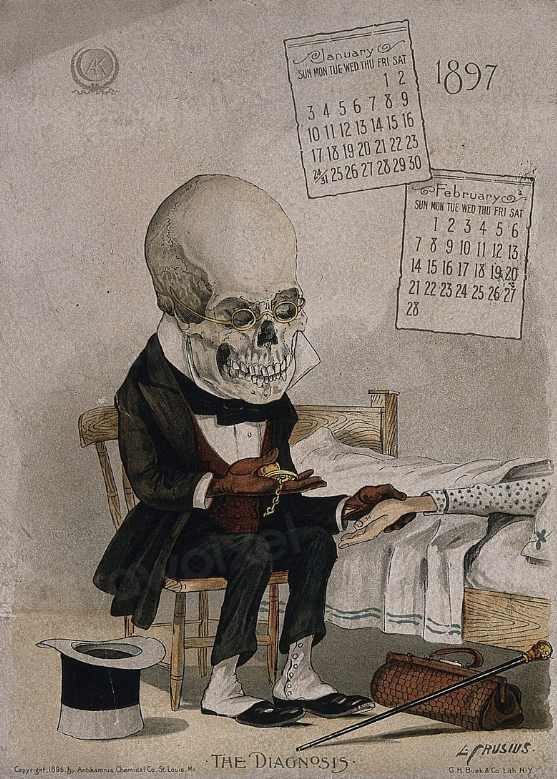
“If the weight of mortality does not grow lighter, does it at least get more familiar?”
Paul Kalanithi, neurosurgeon and author, asks this of his readers in the face of his own terminal illness (183). It is a question loaded with the impossible task of response. No answer seems to both succinctly and precisely convey the transcendent feeling of reprieve upon the dying with the utterance of a naive ‘yes’, while simultaneously preventing the resulting sensation of existential dread and spiritual guilt with a blunt ‘no’. And yet, the question is a sentiment echoed out of need by many patients facing the imminent, as the sheer ambiguity of the whole experience offers little reprieve from its induced anxiety (Becker 34). On the other side of the coin, physicians — at the forefront of patient care — witness mortality through the unique perspective of direct involvement and influence as medicine continues to grow more and more in its capability and scope. Death remains a constant in their profession, and protocols shaped by centuries of both medical triumph and loss remain steadfast in their presence and authority over practitioners in such instances. However, this objective certainty — as objective or as certain as it can get — paints an incomplete picture.
Narrative medicine illustrates a fuller and more contextualized one, depicting the complexity of dying while offering interesting interpretations of its meaning and finality. To medicine, a field ruled by strict delineations and unending processes of differentiation through established qualitative and quantitative standards, mortality is a matter of “yes” or “no”. While some cases could certainly raise queries and gray areas, no individual ever remains half-dead and half-alive, or a “maybe” in perpetuity or by design. Narrative medicine challenges these notions by exploring how mortality can be depicted as an idea without goalposts or boundaries, shaped and reshaped ceaselessly by the ambiguity of the human experience. It does not seek to define, but rather to explore truths and possibilities beyond the physical sciences. It revels in questions that cannot be answered with absoluteness and without qualification, questions like the one Kalanithi presents.
Five works authored by physicians, each from different medical specialties and editorial focuses, attempt to tackle such ambiguities and interpretations through the lenses of their authors’ own training, experience, and cases. This paper examines When Breath Becomes Air by Paul Kalanithi, Being Mortal: Medicine and What Matters in the End by Atul Gawande, Code Gray: Death, Life, and Uncertainty in the ER by Farzon Nahvi, Telltale Hearts: A Public Health Doctor, His Patients, and the Power of Story by Dean Schillinger, and Open Heart: A Cardiac Surgeon’s Stories of Life and Death on the Operating Table by Stephen Westaby.
What is death?
The definition itself of what it means to be dead remains contentious. In the past, physicians relied on basic heart and lung activity: did the patient have a palpable pulse, and did the patient continue to breathe?
Kalanithi seems to agree with this notion. The title itself of his work, When Breath Becomes Air, argues that there is a fundamental difference between breath and air that even allows the transition from one to the other in the event of death. This contrast can be semantically debated, as the denotative difference between breath and air can seem arbitrary: both concepts are defined as gaseous states that may be taken into and expelled out of living lungs. However, Kalanithi’s linguistic choice is much more deliberate in what he considers holding value in the experience of living. Whereas breath remains the direct consequence of being alive, a manifestation of consciousness, air is the passive composition taking volume within space regardless of an internal or external lived experience. Whereas breath is dynamic and dependent on the being that makes its presence possible, air is an energy lacking intentionality, affected even by non-living matter. This distinction allows Kalanithi to associate the act of breathing itself with the quality of aliveness, a signal to his readers that his definition of what it means to live is to breathe, and consequently, to cease breathing — and thus transitioning breath to simply air — is to be dead. This last act of living, this forceful exhalation of what remaining air there is in the lungs at the precipice of death, is Kalanithi’s definition of life and death.
Westaby takes to the other component in this classical definition. A cardiac surgeon, he unsurprisingly determines and discusses death through the subject of the heart. His memoir, Open Heart, offers an insightful look into the high-stakes field of cardiology and is unflinching in the realities of mortality within the operating room. In its opening pages, readers are immediately introduced to what Westaby constitutes as death: the lack of the “life blood” carrying oxygen, vital to all other secondary organs — including the brain and its electrical impulses — and endlessly facilitated by the heart’s tireless circulation (4, 225). Westaby noticeably characterizes the deceased woman central to his formative experience as a surgeon with death by a flatlined electrocardiogram and an “unworking heart” (11), by the liter upon liter of spilled blood all over the operating theater and everywhere but in the one vessel it belongs to (14). In observing the autopsies of the mother-son pair Westaby encountered in the Middle East, he contrasts the boy’s utter lack of blood versus the accumulated liquid upon the slab where the mother rests (72-3), fixating on the finality and the tragedy of their stories that he cannot redeem. Most interestingly, Westaby opens the seventh chapter with a quote from Henry Wadsworth Longfellow: “Ah, nothing is too late, Till the tired heart shall cease to palpate” (97). Asystole and the resulting termination of blood flow precede individuals’ expiration in every single one of these instances. Westaby continuously underscores within the text the implication that the irreversible course of mortality is associated, if not directly caused, by the arrest of the heart. He weaves together such pivotal moments to tell his readers that the undeniable marker of death is the loss of vitality and function within the pulseless heart and everything that comes with it.
In a delightful work of contradiction, these two authors classify death into the obscure and the apparent, respectively. Whereas Kalanithi focuses death on the crucial subtlety of gaseous breath, Westaby focuses it instead on the solid muscle of the heart and the rich liquid of the blood. It is a testament to the duality of this traditional explanation, the conjoining influence of the aerated and solidified matter, on the answer for what “passing on” truly means. And yet, while it is important to note that breath and blood represent two different ideas in these texts, they are two sides of the same coin, two pillars that act as foundation for the greater understanding of death. Blood allows breath to work in every fiber of the human being, and breath transforms blood from ferrous liquid to life. Nahvi, an emergency physician, demonstrates this intertwining in practice within his text, Code Gray: pulseless and intubated for the profound lack of ventilation, his patient’s lack of those two markers of life wholly signify “death . . . without recourse” (54).
However, as medical technology has advanced enough to allow for pulseless patients with ventricular assist devices, and for patients under the heart-lung bypass machine that renders their own two organs inert, these standards in the context of the present have become deficient. Catching up with science in that era of rapid innovation meant there was a need to legally and medically redefine death. This unraveled the longstanding tradition of breath and heart standards, and told patients and professionals alike that death’s benchmark can be changed. What being dead may look like is a living determination, progressing parallel to the marvels that medicine may offer.
Gawande, a general surgeon, acknowledges this and offers a radical standard as the alternative. His idea of the dead walks and talks like everyone else, lungs filled and skin flushed. Alice Hobson, his wife’s grandmother, exemplified his version of the undead. “[S]pirited and independent minded,” she was the type of woman to embrace her age without sacrificing her youthful spirit (11-2). Her energy and vitality defied expectations for someone her age, and although aging undoubtedly took its fair toll, actual concerns did not materialize until a series of falls caused by rapid weakening, and a life-threatening robbery from physical and mental deterioration (13, 23, 43). For her safety, Hobson was moved into an independent-living apartment within a senior housing complex, checking boxes for objective measurement of good living like accessibility and availability of assistance. Her relocation was a triumph for those who cared for her. But Alice became a shell of herself — while her body remained imperfectly fine, Hobson lost the ability to travel individually, lost weight from an utter lack of appetite, lost the will to engage in any sort of social scene, lost autonomy and privacy in the presence of endless nurses and personal aides. Gawande notes, “[s]he remained recognizably herself, but the light had gone out from behind her eyes” (60-1). Two serious, unattended falls in her apartment forced her to move into the skilled living floor of a nursing home, and in the face of complete unwanted dependence, Alice would fill out her Do Not Resuscitate form shortly before she actively let death’s course overcome her in defiant silence (73-78).
Gawande argues that Hobson’s sweeping rejection of anything that might give life some meaning marks the true start of her death. It is far more subjective and far less distinctive than the mechanical stop of a heart or a pair of lungs, but Gawande meticulously compares the person that she was before and after her removal from her home to sharply underscore such a dramatic change in personality. Gawande paints her as a vivid and lively woman, someone who led her life with the purpose of maintaining relationships, cultivating long-standing hobbies, and serving the indisposed (13). Although she was unsteady on her feet and prone to confusion, she was able to live as maximally as she pleased, accountable only to her own constitution. Hobson was alive, was continuously and impressively dressed in blouses and heels, and was able to make mistakes like any other individual, even if they threatened her safety and well-being as an older woman. Her transfer to an assisted living facility yielded a woman who was markedly the opposite, who shrank in her closed quarters instead of conquering the world outside, who exuded helplessness instead of self-assurance. Out were the blouses and heels, and in came the hospital gowns and antidepressants. Hobson was breathing and pumping blood, but in the face of incessant changes and deprivation of dignity and privacy, she unquestionably chose the opposite.
Westaby thinks about the body without the blood, shriveled up and pale. Kalanithi imagines it without the air, choked and blue. Gawande contends that no, the dead are pink and medically cleared, but are without soul. Death goes far past beyond when cardiopulmonary resuscitation is ended, when atropine was last pushed to give a dying heart a fighting chance, when the unmistakable ringing of a flatline ends as a plug is pulled. Death starts when the body becomes a hollow hub of organic matter devoid of necessary substance, sort of similar to what Kalanithi and Westaby posit. But, to Gawande, everything that follows, symptoms and ailments and all diagnoses in between, is the beginning of the end as the natural consequence for when individuals like Hobson are stripped of essence and autonomy.
Who Dies?
Everyone.
Sometimes, it is an act of tragedy and the extraordinary. Schillinger recounts his experience with Melanie, who died of septicemia over what should have been an innocuous day in the waterpark. A diabetic “with poor sensation in her feet,” she unknowingly acquired serious burns on her bare soles after a day of standing on the park’s blistering concrete, which rapidly led to bilateral gangrene of the feet, an amputation, and finally, death by blood infection (234-5). Nahvi fought the SARS-CoV-2 virus at its worst, armored in constricting layers of personal protective equipment at the battlefield of emergency rooms, and saw both patients and physicians fall en masse. It was an unprecedented era defined by the necessity of mental resilience in the face of widespread mortality. Even in a normal shift past the era of the pandemic, what was a relatively inconspicuous cardiac arrest revealed itself to be a product of a ruptured ectopic pregnancy that led to uncontrollable internal bleeding, a blindsiding and “cruel twist of fate” to unexpecting parents — one of whom became newly widowed that very night (186-7). In the emergency room, especially, death seems to be a game based on the randomness of what a physician can or cannot anticipate. Their “routine [after all is] to encounter impossible situations for which there exist no answers” (47). When would a freak accident take life next?
Most other deaths are fortunate enough to happen with notice. They result from population aging, primarily caused by cardiac, neurological, and pulmonary diseases — or those called upon by natural causes (Li et al. 2023). But to expect it is not necessarily to do so with grace. Gawande likens the process of aging and dying to the creeping vine: gradual and unrelenting (35, 42). It is pervasive and it demands to be felt, in every joint and sound and memory. It “is a continuous series of losses,” a “massacre” of mounting “unfixables” that cannot be staved off but can only be tolerably adjusted to, as if a person is guesting in their own home, barraged by disease meant to be foreign to the body (42, 46, 55). Dying like this is Sisyphean: laborious and futile, with true success just within an arm’s reach until another chronic illness comes their way, setting off its own strenuous path to recovery that falls short of the patient’s previous baseline (27). Although these deaths have the privilege of time, they also impose the burden of experiencing it without an avenue for recourse. They are afflicted with the opportunity of knowing how it all concludes.
No one escapes it, in the end. “Death comes for all of us,” Kalanithi says, and it “always wins” (114). He knows this all too well as both doctor and patient. The job requires physicians to rely on blunt numbers and blind chances when prognosis and life expectancy are algorithmically quantified by a percentage within the context of time. He asks himself, “Why not me?” when confronted by his patients’ terminality and, indeed, it was only a matter of time and statistics before this question manifested itself in his own body (138). No individual is untouchable, and even the individuals most powerful to stop mortality fall short of ever truly succeeding.
Kalanithi wrote “to help people understand death and face their mortality,” to “help others [in] a contribution only he could make” as he married the culmination of his passion for literature and medicine together — and he has unequivocally done so (215, 224). His writing continues to speak to those who he is survived by, to teach those who are lost, and to comfort those who are afraid, like a loved one to whom an individual entrusts themselves in times of doubt and hardship. Most especially, he wrote because he knew of the power language carries, the way that “words have a longevity [he does] not” (199). Words etched in each page of every copy of his book have the privilege of time he lacked, and they will continue to uphold his legacy until the pages fall apart and paragraphs erode. His goals, beliefs, and personhood continue to exist within the print’s enduring ink, a physical manifestation of who he is beyond his body, still vivid and powerful for decades to come. He exists in the everlasting memory of his prose and of loved ones who carry with them his speech, heart, mind, and soul: parents, siblings, wife, and daughter, all of whom continue to recognize Kalanithi’s being and honor his life’s work. Kalanithi remains alive in all ways but in physicality precisely because of his exhibited power to remain present without needing to actually be so. His text is an attestation to his early and untimely demise but also to life in continuation, to the experience of simultaneously being both alive and dead. His corporeal form has long since expired, consumed by the natural cycle of all life forms and returned to the biosphere. But pieces of both his life and death, intricately woven into his work’s words and entangled with the memories of lives he’s touched, continue to outlive him and stir millions whom he never would have touched without his mortality.
Kalanithi’s story of life after death is joined by stories like that of Schillinger’s Melanie and Westaby’s Peter. Their lives, immortal only in memory, preceded what were ultimately tragic deaths. And yet, they are remembered for shaping the future of public health policy and cardiovascular technology, respectively. Melanie’s story was the final trigger for Schillinger to take on billion-dollar sugar-sweetened beverage companies and overhaul California’s loose regulations on corporate marketing. He ends up being a champion for disease prevention and health management through Melanie’s legacy. Although it was Dr. Robert Jarvik who pioneered the heart pump and Westaby who performed the surgery, Peter’s seven-year tenure as the first person to live on blood-pump technology wholly demonstrated the unprecedented quality of life patients with severe heart failure can have without transplantation. Peter was the innovator who changed the course of history within the field of cardiology by being the vessel in which scientists’ research and stories can reside. Melanie and Peter exist beyond their years in the works they inspired and the changes they sparked, a lifetime’s worth of legacy not in vain, facilitated by soul and spirit untethered to the limits of the human body. Everyone expires, indeed, but manifestations beyond imagination and earthly limitations live on, like Kalanithi, Melanie, and Peter.
How do physicians feel about patient death?
The stereotype goes that doctors, after years upon years of training in taking care of the sick and critically ill, experience loss as second nature (Davies 2016). While the number of deaths encountered and the severity of each patient’s condition beforehand vary by specialty, truth does lend itself in part to the statement. Westaby writes with a certain objectivity not necessarily found in the other works, with an air of routine and emotional removal as he tackles one difficult surgery to the next difficult patient. Whereas other authors choose to emphasize the dialogue and emotional subtext not immediately found in medical practice, Westaby avoids focusing on a patient’s personal impact and the subjectivity they bring to such a precise endeavor. Nahvi might indulge in his ethical discomfort of a patient’s treatment (139) and Gawande may revel in the linguistic complexity of end-of-life care needs and the insecurities it brings out on both sides of the patient-physician relationship (182), but Westaby only consistently highlights the science behind cardiology (2-4, 10), the dexterity and fine skill needed to successfully execute open heart surgery (162-3, 102-4, 205-7), and the technical prowess of each innovation that allowed patients a fighting chance against terminal disease (99, 141, 158-9). This is not to say that Westaby is devoid of emotion — he exhibits tremendous compassion as he took on Mr. Clarke’s case out of impulse and sheer resolve to ease Mrs. Clarke’s worries despite other pressing hospital duties (195), and dedicates Chapter Fourteen to college student Alice Hunter, whose posthumous graduation ceremony he attended and decidedly described as “[t]he saddest day of [his] whole career” (228). But Westaby practices medicine using tangibles and the knowns. Other works deeply and thoroughly engage with the role that abstract, emotional interaction critically plays in the medical community, but the same cannot be confidently said about Westaby’s attitude towards emotional patient involvement.
Westaby makes his position clear. He says that “to dwell on death [is] a dreadful mistake…[and] to indulge in sorrow or regret brings unsustainable misery” (15). His writing, as discussed previously, is a conscious reflection of such ideals. In his field, as a surgeon for those in desperate need of a chance to survive a single night, all medical work is defined by risk and death’s cards dealt on the table. To involve himself personally with every single individual and every family waiting on news about their loved one in surgery would be to take away time from the next patient and their own family that each need him whole. To live in each loss is to detract from the time spent preventing the next one. With so much at stake, Westaby knows that wallowing in bereavement makes one doubtful, distracted, and regretful; three things unbecoming of someone holding a scalpel under pressure of life or death (16). Open heart surgery is “insensitive” and “callous”, but even in the face of insecurity and fear of mistakes, it must keep its facade of strength and valiant optimism (15-6).
Out of the authors examined in this study, Westaby seems to be the only one to have this position. For Kalanithi, he had no choice but to consider illness personal as it had invaded him thoroughly through his last moments. There was no line between patient and physician that the likes of Westaby remained ever so steadfast on preserving— Kalanithi played the role of both, at odds with each other, in his quest for treatment. Though the latter was quite adept at interpreting data and prognoses, the former struggled with acceptance and the choice of moving forward (139). But this duality also gave him unprecedented bravery when faced with terminality. He had “trained for years to actively engage with death, to grapple with it, like Jacob with the angel,” and this “onerous yoke . . . of mortal responsibility” allowed him to stare for himself at the eyes of death in fortitude (114, 215). Kalanithi’s pain as both provider and pursuant of care remain tightly bound to one another, for better or for worse.
When an illness ravages all that it touches and decimates established systems in the healthcare industry, death also becomes intimate. Nahvi saw multiple physician fatalities and “countless [other] doctors, physician assistants, nurses, clerks, technicians, and custodial staff” infected in the throes of the COVID-19 pandemic (11-3), and beyond hospital walls, the endless ramifications of the virus followed him in his home and within his family. Particles of the disease became a constant thought — regardless of whether or not they truly were present — to prevent contamination from his soiled ER gear to the rest of his life, and family members succumbed to the same consequences Nahvi saw from patients and colleagues (31-5). Nahvi saw a disease that did not stop in operating rooms or his own body, but one that relentlessly chased every fiber of human society to devastate. He battled against a virus that forced professionals to see each other at the brink of physical and moral collapse and to cook their disposable masks in the hopes of beating something far bigger than any of them (18-9, 36, 39). All death in this era was a personal loss, a personal failure of the industry meant to protect those that it serves and those that provide its service. Separation of personal and professional life is impossible when both the illness and the dead actively haunt each crevice of the provider.
Experience with death does not necessarily equate to emotional bluntness. Although doctors may develop coping mechanisms, common or unusual, like Westaby has done over his years of practice, patient death “can (still) have a significant psychological impact on the physician” (Kinany et al. 2024). So much so that these deaths often can lead to profound efforts to make changes and speak unvoiced criticisms in longstanding traditions of medicine.
How do doctors feel about the healthcare system?
Dr. Juergen Bludau tells Gawande that the goal of any physician is to “support quality of life . . . [by ensuring] as much freedom from the ravages of disease as possible and the retention of enough function for active engagement in the world” (41). For the aging population in the United States, this means life in assisted living centers, where close monitoring and immediate availability of an assortment of professionals allow the prolonging of the elderly’s lives. In such places, Bludau’s condition for quality of life is measured through health and safety ratings, not through patient satisfaction scores accounting for loneliness and ability to thrive (105-6), like discussed in previous sections. Lou — a senior living in one of such facilities — saw “no one without a walker,” indicating the availability of medical support to the frailing population, and yet immediately felt disconnected from everyone and his surroundings as he discovered that “no one seems to think it was their job to actually assist him with the living—to figure out how to sustain the connections and joys that most mattered to him” (104-5). Gawande proposes that “[M]aking lives meaningful in old age . . . therefore requires more imagination and invention than making them merely safe does” (137). The healthcare industry has to redefine its purposes and reset its goals to truly make meaning of the original intention of treatment. Purpose and connection are what drive human beings to drive and keep going, not walkers and antidepressants (124). Gawande suggests that even small glimpses of these two, such as being the person assigned to walk the dog or interacting substantially with school-aged children (125, 132), are enough to keep people from spiraling further into medically induced death. Such connections include more collaborative forms of decision making between patient and physician within palliative care, cultivating a culture of patient autonomy simultaneous with doctor expertise in the end stages of life (201-2). Modern geriatrics must make way for newer, more humane approaches, ones that prioritize the patient over the institution.
Gawande’s solutions are derived from multitudes of research, case studies, and longitudinal studies. Some institutional problems present themselves more readily, even unwantedly. Nahvi’s accounts during the pandemic revealed the government’s refusal to test patients in the interest of covering up indications of uncontrolled transmission (1), the secrecy that curtailed life-saving information from healthcare workers to protect hospital systems (16), and the utter lack of organizational support that forced staff to get by with scraps and make do with scientifically unsound policies (19-26). Nahvi cites Kaiser Health News and the Guardian in deeming the countless deaths to be a product of numerous failures in the nation’s duty of providing adequate resources, funding, and safety enforcement (27). In other words, preventable. In the height of the pandemic, physicians saw the worst in the healthcare industry: staffing shortages, lack of protective equipment, and inconsistent public health measures, to name a few — problems exacerbated by the single fact that the American healthcare system was not made to address these. Though the pandemic left no country untouched, internationally, Nahvi saw the United States “failing the standards set all over the world” (30), wherein American physicians were left to fend for their own well-being despite extremely challenging circumstances, whilst Asian and Oceanic governments endeavored for their own. In an era defined by major global crises, Nahvi hoped for a healthcare system that worked in the earnest interest of saving lives and nurturing staff, but he got one that put public image and cost-cutting measures at the forefront. Though he hoped for a country that regarded honesty and cooperation as essential, he got one that worked to spread misinformation and individualism. The system he worked for was a reflection of the intentionality set behind these policies and choices, of the need to gain more than any institution can possibly give. Nahvi saw this at the forefront and realized that unchanged, unsustainable practices led to unnecessary death (46).
Westaby’s commentary on England’s healthcare system, the National Health Service (NHS), focuses less on its fundamental structural flaws — for example, the drawbacks of being a universal healthcare system as opposed to the United States’ prevailing use of private insurance, or the intrinsic intertwining of politics and health within the institution, among other criticisms — and instead specifically reviews its struggle with appropriate funding. Jim Braid, a patient with dilated cardiomyopathy and whose time was increasingly becoming more and more limited, relied on charity for the tests and procedures necessary to keep him alive because the NHS denied funding (244-5). The refusal seems crude and offensive to Westaby as he implies that, in rebuffing young patients with heart failure that desperately need innovative surgery like Braid’s, a developed England is no better than a “Third World” nation that uttered “no” the same way but only did so out of absolute lack (246). Westaby saw many such cases as this, where patients in the direst points of their life and just about as close to death as they could be without crossing the bridge, must rely on remaining charitable or research funds because the NHS will not pay for treatment. Julie and Stefan, two pediatric patients, were the only ones Westaby wrote to have had the privilege of operating on in Oxford with the placement of the Berlin Heart due to the absence of further funding. As a result, many other children with heart failure lost their lives without adequate care that could have been given if research efforts did not have to rely on sporadic and easily expendable charity (151). In a world where NHS funding, a governmental obligation inscribed deeply into England’s social contract, is considered an expectation and not a holiday gift, many more Jims, Julies, and Stefans may have been afforded the priceless opportunity of life.
One sweeping theme becomes apparent: the healthcare system as it exists today is utterly unable — and even unwilling — to meet the demands of necessary patient care. Across the writing of these three authors, the system endeavors to generate much more in revenue than it is willing to give out in aid or insurance. Medications given to temporarily mollify patients in Gawande’s assisted living centers take up less time and staffing needs, both of which excuse institutions from spending more if they were to tackle residents’ emotional and mental dissatisfaction in earnest. To do so would be to dedicate more one-on-one time with each individual as they get to choose what kinds of activities they would like to do and when, to onboard more personnel provided with competitive wages commensurate with their responsibilities that can alleviate staffing workload, to devote more attention to meaningful end-of-life care beyond office mandates. This leaves physicians like Nahvi to individually figure out how to protect themselves amid a raging epidemic, a method which costs less than intensive research, development, production, and roll out of personal protective equipment subsidized by both the public and private sectors. Even with consistent reports of mass suffering, corporate secrets are safeguarded in the interest of public perception and the value of stockholder knowledge. The NHS’s unwillingness to cover inventive and extraordinary technologies — despite the establishment’s dogma of fair and equalized accessibility of medical treatment regardless of socioeconomic status — is a reflection of the ambition to cut expenditure aggressively, even at the expense of human lives. In weighing the price of healthcare and death, the NHS may find the second to be much more appealing in its efficiency to lower governmental budgeting.
Gawande, Nahvi, Westaby, and countless other physicians are forced to battle external assaults on the principal tenet of their careers — to, first and foremost, do no harm — based on capitalistic gain. How can doctors do no harm if they must pick who gets saved when funding is limited? If they can only watch a patient wither away, helpless and tucked away in their apartment, accompanied only by a carrier? The healthcare industry, though thought to be a shining beacon of altruism that attracts aspiring medical professionals passionate about helping others, reveals itself as a money-making machine obsessing over the wrong kinds of metrics without so much as a glance at the real people it leaves behind.
Conclusion
Kalanithi never truly got the answer he was looking for. He might have gotten close to it, as he reflected on the life he had led and the story that he would leave behind. And yet, even without that singular moment of clarity or certainty he was hoping to get, Kalanithi accepted mortality with utmost bravery. The most honest, vulnerable, and tender parts of his self arose from the opportunity to grow within that unknown, in the ambiguity presented by the finality of dying. His life and death became an inspiration, an example for many on how to handle the terrifying unknown with grace and love. In Kalanithi’s physician-author fashion, he demonstrated within his journey how medicine and the humanities bring the best out of each other: the authenticity of the former and the depth of the latter.
All five works explore multiple facets of death, and attempts to know what it is and how it affects the lived experiences of those society trusts most to tackle it yield even more variables and thoughts that cannot be summed up with definiteness or singularity. Physicians from different specialties, though coming from the same general background of medical education, seem to prioritize one factor of death from others. Their lived experiences within the healthcare system shape the way they perceive patient interactions in moments of life and moments of eternal rest. Death is the culmination of successes and failures, of laughter and tears, of sickness and health, of affirmations and doubts, all leading to the end of human life. It is only natural that this paper, a review of the very act of dying itself and texts tackling it with no real intention to answer the given questions with authority and finality, reflects that same nature of enigmatic complexity in pursuit of holistic evaluation.