The Funeral Guests
A knock at the door turns the attention of the onlookers away from the casket.
The Guests have arrived.
The observers shuffle in through a dim-lit foyer, one by one. You are among them, though one passing by would not be able to distinguish you from the others, all dressed head to toe in black. The subtle buzz of conversation fills the room as drenched hats and coats are hung near the doorway, taking shelter from the rain that claws at the windows and leaves droplets racing down the misty glass. The streets outside become a watercolor blur of grays and yellows. You leave on your coat, hat, and scarf as you continue inside, unnoticed in the sea of dark clothing.
The venue itself is a standard parlor, with bouquets of carnations lining the walls. A decades-old piano sits idly in the far corner, dust gathering on the forgotten keys. Candles cast shadows that dance across the walls in mockery of the occasion.
You listen in on the conversation, but all that is overheard is the same. Greetings between old friends, shared stories of great accomplishments made by the one you are here to see. But above all, the great question is what remains the center of conversation. It remains at every one of these occasions, from years past to years to come: “When are they going to arrive?”
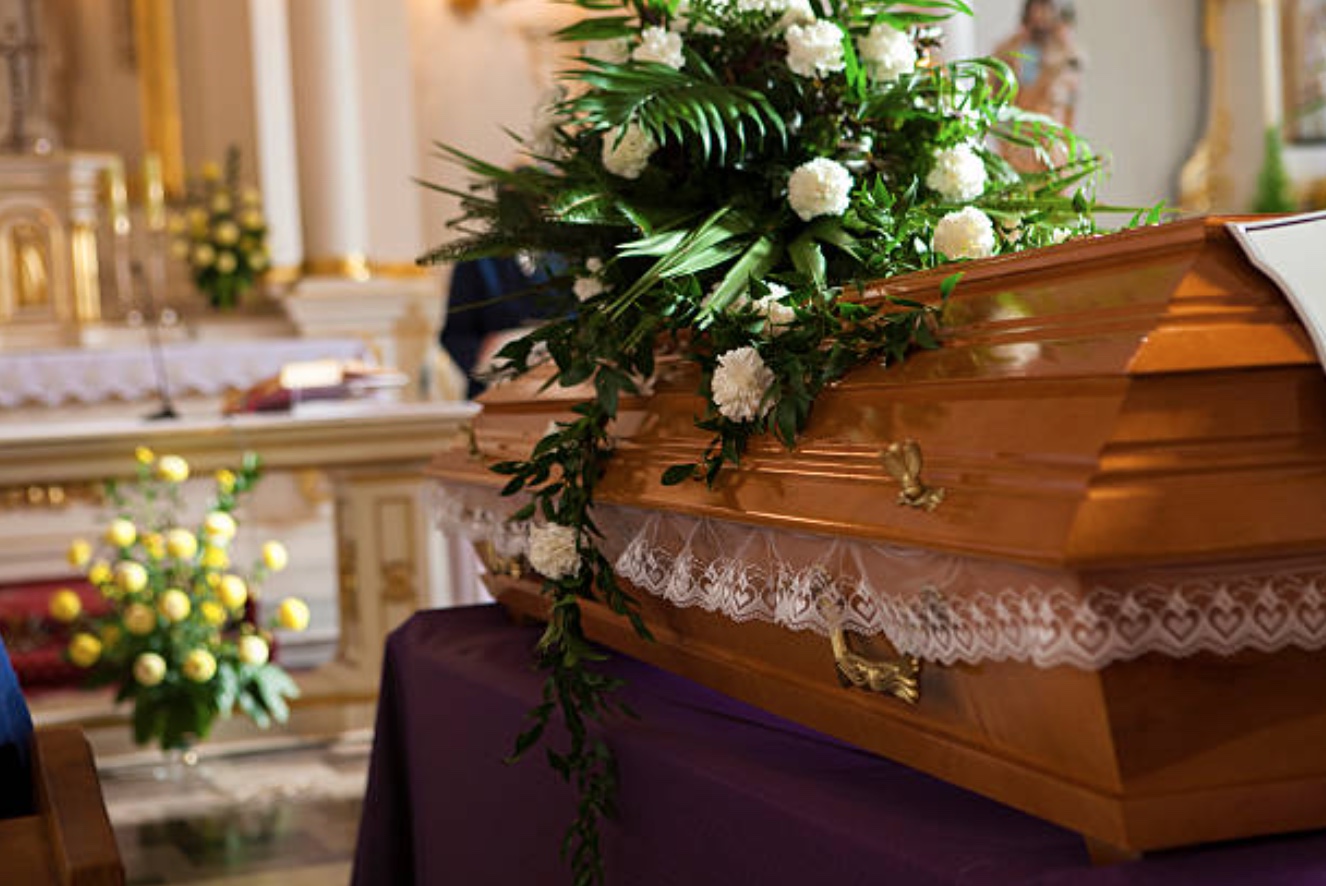
There is no official time, only that everyone must be ready. You watch the antsy old man across the room check his watch, you see the young girl sitting near the window peer outside with her hand pressed to the cold glass in anticipation as her breath creates puffs of fog, but you know better. You have attended many of these occasions, seen them come and go, and you know that it is always the same. There is no one pattern, for each person is different. The Guests arrive in the manner of how they lived in their time; some slow and leisurely, some in a rush to pass through. You follow the others through the quaint room to the chapel. It is a much wider area with an arched roof, several aged windows on each side, and aisles of benches waiting to be occupied. At the far side of the room, there is an old engraved door leading outside into the storm. The air hangs heavy with the smell of chrysanthemums and rain. You suppress a faint smile to yourself. If not for the occasion at present, one might mistake the venue for a wedding. Mosaics span the far wall and cast a colorful light onto what sits beneath. The casket is blooming with flowers of every shade, but they all have a certain dullness to them that gives the impression that they are already dying. It sits on an elevated stage, visible for all to see. The front is propped open, but you do not want to look at the person inside. You can already see enough from where you stand: waxen fingers resting atop a chest. You try not to think of the lack of the rise-and-fall of it, the lifeless stillness that is weighing the body down.
At a small, wooden table near the archway entrance are various refreshments. You fill up a plastic cup with water and it lightly trembles in your hand as you keep your eyes trained on the rippling liquid. You venture to the far corner of the room. Sitting at one of the aisles beneath framed paintings and flickering chandeliers, you turn to the rain outside. You have the sudden urge to run outside and let the water soak through your coat, your shoes, until all of you has been covered, if only to experience the childish joy of it that you have missed so dearly. The thought brings a sudden sadness.
“How did you know him?”
You quickly turn from the window. An older woman sits beside you without you having noticed her presence. Her hair has almost completely grayed, but hints of auburn peek through the loose strands that have fallen out of her elegant braids. There are wrinkles at the corners of her lips and her eyes, hinting at a life filled with smiles. She smiles at you now, anticipating your response. You nearly forget her question, so distracted by studying her. Instead of replying, you take a sip of your drink and quickly turn away, the dense folds of your scarf shielding you from her gaze. The woman seems confused, but she nods anyway in feigned, polite understanding. That makes you smile, a nostalgic warmth settling over you. She always was so keenly aware of making others feel comfortable.
The minutes pass by in slow monotony, some tears shed, some laughs exchanged. By and by the mourners move past the casket in routine. You are glad to see their backs shielding the body itself. It is only when the sun begins to sink beneath the hills outside, when just under an hour passes since the start of the ceremony, that it begins; a knock at the door turns the attention of the onlookers away from the casket.
The Guests have arrived.
The man at the door is stout and middle aged, dressed in business attire. From the moment he enters the parlor, he looks unhappy. As he shakes out his coat, everyone in the chapel holds their breath, as if hoping to keep the seconds from passing, to keep him here forever. They think he is the first Guest.
He is the second.
He passes through the entryway, glancing over the waiting crowd. His finely-polished shoes echo through the space as he makes his way to the casket, to the body, to himself. He stands over the body. Everyone watches. There is no grief nor joy in his expression, only observance. After a while, he makes the only sound heard in the room, a careless “hmph” of acknowledgement. He then crosses the elevated stage and clicks open the back door, escaping to the rain. No one bothers to chase after him, as much as they would like to. No one looks to the trees beyond the door, hoping to catch a glimpse of his exit, or attempts to catch him by his sleeve, begging him to stay. They know that to do so would be futile; once he makes his exit, he is never to be seen again. Once he leaves, there is a moment of quiet, of goodbye.
“I told him he shouldn’t have taken that damned job,” the first to speak ventures out into the silence, “He was grumpy as ever, suffocating himself in all of those suits and ties. That lasted him about two months.” The others laugh good-naturedly, and the ceremony continues.
Over the course of the following hours, more and more Guests make their appearances, some arriving together, others arriving on their own. The Guests linger with the others, listening to their stories and smiling in sentiment. They laugh, they cry, and they catch up. As the Guests go, the crowd’s grief deepens with each passing. Some squeeze their old coworker’s shoulder, some wipe concealed tears from their eyes as their relative shuts the back door behind them. The Guests say nothing of what awaits, but they offer what they can. A comforting smile, a handshake, a heartfelt embrace – all stops on the final journey from one door to another.
You do not greet the Guests, of course. There is no need; you already know them. You know the young man in a Hawaiian shirt holding a barbecue spatula in one hand, sharing laughs with your cousin. You know the older man who has to lean in to hear the question of your longtime neighbor. You know every person who passes through the door. You know the times they suffered, the times they wished they had done differently, and the times that they looked back at all of the past versions of themselves and realized just how far they had come, how different each of them were from the next. How much they had cared for the people here today, how much they would miss them. How much they wished that a goodbye did not have to be filled with such sorrow. You cherish every second, watching each of the dozens of lives you have lived bid farewell to the dozens that helped you live them.
At the latest hour of the ceremony, the presumed “last” Guest, a wrinkled man in a heavy coat and a dark wooden cane, shuts the back door behind him with a slam of finality. You watch everyone in the chapel begin to take their leave, some staying to take one last look at the casket. Soon, it is only you and the woman from before, the one who spoke to you prior to the arrival of the Guests. She still seems perplexed by your appearance, like she has a sense of familiarity but cannot quite place it. She makes her way over to where you sit in one of the aisles and slides in next to you.
“He was my father, you know,” there is a wobble in her voice, as though she is trying to keep herself safe from tears, “I feel like I would have recognized you on the list of attendees. Who are you?”
You smile.
You want to tell her how you used to wipe the tears from her eyes when she would wake up from a nightmare and crawl into your bed, so small you would have to help lift her. You want to tell her how proud you felt when she stood in a cap and gown, holding a diploma in one hand and giving a toothy grin to the camera. You want to tell her how terribly you missed her every day since she left home, but how much of a privilege it was to watch her grow.
You say nothing.
Her expression begins to change. She squints into your eyes searchingly through layers of wool and shadow and there is a moment where the chapel melts away, where you are back in the hospital room, staring into her eyes for the first time. It lasts all too short. Now, her eyes are filling with tears as she begins to understand. She stands up and makes her way out of the chapel. In the entryway, she turns ever so slightly, and nods. She leaves and you watch her go, sending all the love that you can possibly muster with her. And, at last, you take your turn to go up to the casket.
You stare into a faded mirror of yourself, looking down at the body. At first, you expect fear to overcome you. Instead, you realize that you can see every one of the Guests in the final version of yourself, the one that will never undergo change again. Not in this lifetime. They all have come together to form a mosaic of a person, pieced together by hundreds of people and the decisions they made over the years. Instead, you feel peace.
You step down from the casket and walk to the end of the chapel. You look over your shoulder at the far entrance, the streets behind it, the hills beyond, the cities and countries, but most of all, the versions of yourself that walked them.
You have come so far.
Smiling, you open the back door and step into the rain.